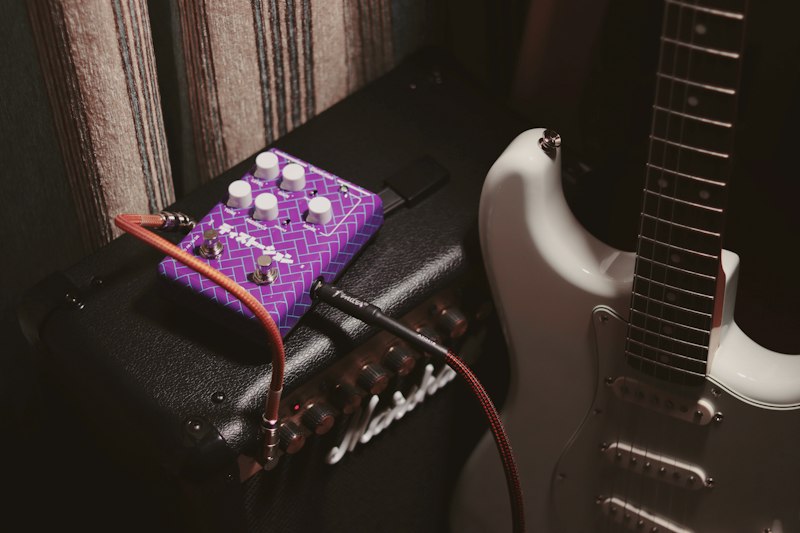
IK Multimedia released the TONEX Royal 45 Legends Signature Collection on May 29, 2026. It is 50 Tone Models and presets built from three museum-grade mid-'60s British 45-watt amplifiers — the JTM45-era circuits that more or less define what "classic rock guitar" means in most people's heads. Two of the three amps were captured from the Capitol Records collection in Los Angeles. The third came from one of Europe's most respected vintage Marshall collections.
I want to be honest about my bias here before I go any further: I have never plugged into one of these amps and I almost certainly never will. They are 60 years old, they live in temperature-controlled rooms, and they are worth more than my car. That is exactly why this collection is interesting to me.
What's Actually In It
Royal 45 Legends is 50 Tone Models. Three amps, captured at multiple gain stages, channel configurations, and cab/mic combinations to get to that number. These are captured with IK's TONEX V2 AI Machine Modeling — the same engine behind the Neural Capture-style snapshots that made TONEX worth paying attention to in the first place, not the older V1 process.
The pitch is that you're getting the amp "dialed in to the perfect tone or sweet spot by the original owner." That framing matters. A 45-watt British amp from 1965 is not a flexible thing — it does roughly one glorious sound, and getting there means the right tubes, the right volume, and the right person having already done the work of finding the sweet spot. A capture freezes that specific moment. You're not getting a parametric model you have to dial in yourself; you're getting someone's already-perfect setting, permanently.
That's the whole argument for capture-based modeling over component modeling, and it's most convincing on exactly this kind of amp — low feature count, high magic.
Why a Bedroom Player Should Care
Here's the thing about a real JTM45-style amp: it makes its best sound at a volume that is genuinely dangerous in an apartment. The entire reason these amps are mythologized is the way the power section behaves when it's working hard, and you cannot get there at bedroom volume with a real one. You need a load box, an attenuator, or a separate room — friction I am not interested in.
A TONEX capture sidesteps all of that. The power-amp behavior is baked into the model at the volume it was captured. I can run it into my Scarlett at 11 PM in headphones and get the cooked, mid-forward, slightly-falling-apart tone that the amp only makes at volumes I'm not allowed to produce. For anyone whose rig lives entirely inside a laptop, that's the actual value proposition — not "it sounds like a Marshall," but "it sounds like a Marshall turned up, silently."
I'll also admit the obvious: the clean-to-edge-of-breakup range on these things is the one tone that consistently pulls me out of my ambient-reverb comfort zone. There is something about a mid-heavy 45-watt British roar that I keep loading up when nobody's watching. This collection is going to be a problem for me.
Price and the TONEX ONE+ Giveaway
Royal 45 Legends is $99.99 / €99.99, with a $79.99 / €79.99 introductory price for now. It's delivered through ToneNET and works across the full TONEX ecosystem — the Mac/PC software, TONEX for iOS/Android, the TONEX Pedal, TONEX ONE, and inside AmpliTube 5.
The more interesting line: every registered owner of the TONEX ONE+ — existing and new, for a limited time — gets Royal 45 Legends for free. IK launched the ONE+ on May 7, so this is a fairly transparent move to make the new pedal more attractive while the launch is still warm. If you were already eyeing the ONE+, the math just got better. If you own a different TONEX product, it's a paid add-on like any other Signature Collection.
The Bigger Pattern
This is the second IK signature drop in a week — it landed alongside an Alex Lifeson collection — and it fits the strategy IK has been running all year: the TONEX hardware is the razor, the Tone Model collections are the blades. The captures are where the recurring revenue lives, and "museum-grade vintage amp you can't otherwise touch" is a smart category to keep mining, because it's the one thing component-modeled platforms genuinely can't replicate. You can model a Plexi from a schematic. You can't model this specific 60-year-old amp with its specific drift and its specific Capitol Records provenance unless you put a mic in front of it.
Whether that provenance translates into a sound you couldn't get from a cheaper capture is the open question — and it's the kind of thing worth A/B-ing in headphones before deciding. But as a way to get a permanently-cooked vintage British 45 into a laptop with zero volume, zero maintenance, and zero insurance, it's hard to argue with the format.
Dig Deeper on Fader & Knob
- New to capture-based tone? Start with our TONEX platform guide for signal chain fundamentals.
- Wondering how TONEX captures compare to the other AI platform? See TONEX vs. Quad Cortex captures.
- Want the wireless pedal that comes with this collection free? Here's our take on the TONEX ONE+.
