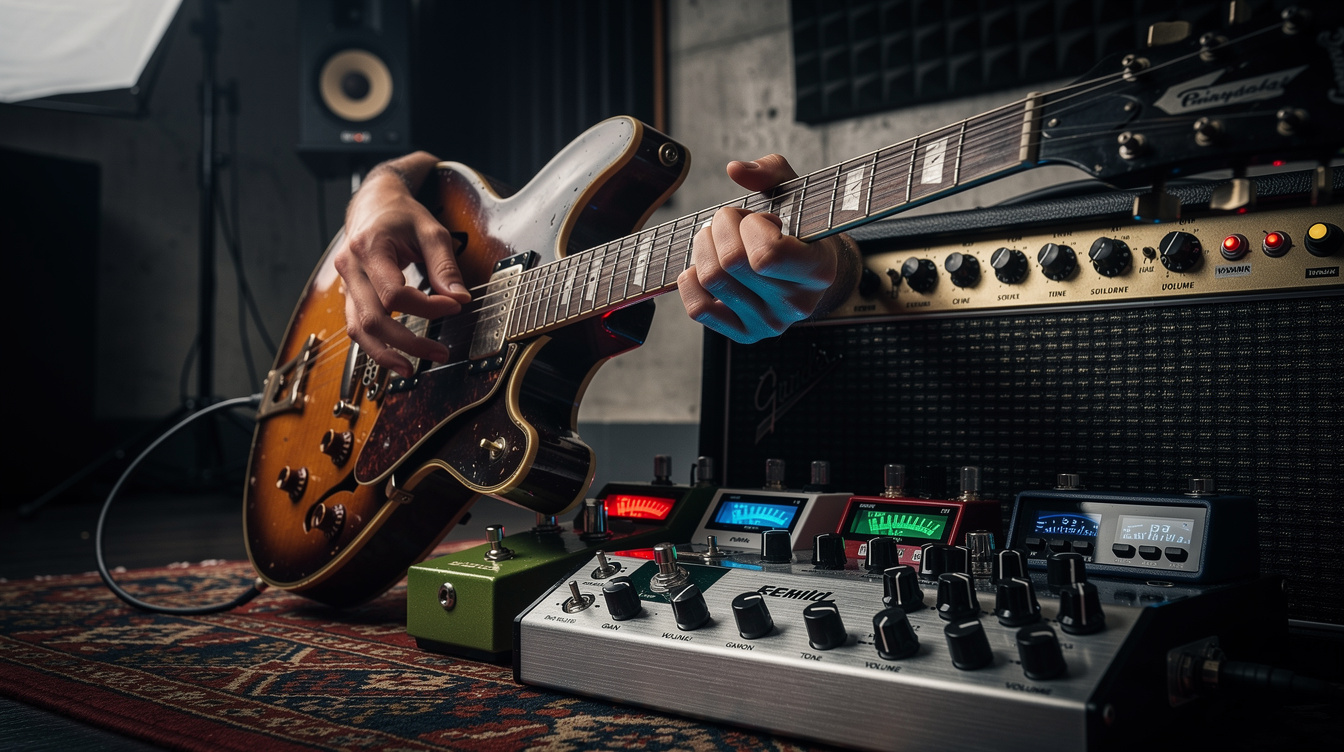
What hybrid picking is: You hold a flat pick between your thumb and index finger the way you normally would, and you use your middle finger (or your middle and ring fingers) to pluck additional strings. The pick handles some notes. Your bare fingers handle others. The character difference between the two is the point.
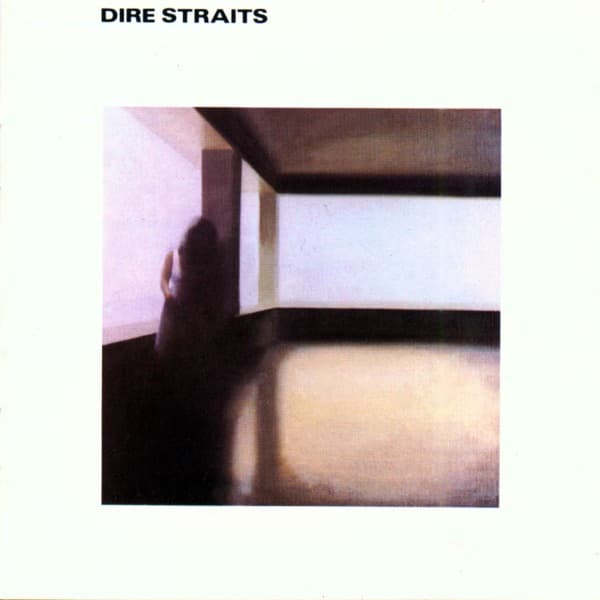
Most of what you'll read about hybrid picking is written by country guys for country guys. Chicken pickin, double stops, Brent Mason licks. All of it applies, and none of it is wrong. But Knopfler never played a country song in his life, and he's the guitarist who made hybrid picking famous to everyone who wasn't already watching Hee Haw.
If you've avoided the technique because you play rock or blues, here's what you're missing.
The Right Hand Setup
Hold your pick the way you normally would: thumb and index finger, angle of the pick to the string is whatever works for you. Now relax your middle finger. It should be roughly parallel to the index finger, pointing toward the strings, ready to curl and pluck.
The middle finger plucks by curling toward the palm, catching a string on the way. The motion is a short snap, not a slow curl. Think of it as flicking something off a tabletop with the tip of your finger.
A few things that make this easier:
- Pick thickness matters. A thinner pick has more give, which makes the transition between pick and finger feel less jarring. I use a medium; it's a compromise I'm comfortable with. Go too thick and the dynamics between pick attack and finger snap diverge so much it takes time to even out.
- Don't change your pick grip. The most common mistake is gripping the pick differently when you're about to use the middle finger, anticipating the move before it happens. Keep the grip constant. The middle finger does its work independently.
- The middle finger sounds different from the pick. That's the feature, not the bug. The pick has attack. The finger has meat. When you mix them, you get both.
Mark Knopfler: The Canonical Non-Country Example
Knopfler doesn't use a pick at all; he plays with bare fingers and has since before Dire Straits. But his technique is the reference model for what hybrid picking (or finger-style rock playing) contributes that flatpicking doesn't.
Listen to the intro of "Sultans of Swing." The notes aren't even loud, but the phrases have a rolling quality, a mix of articulated hits and softer implied beats, that a flatpick into a neck pickup wouldn't produce. The softer finger attack on middle-string notes creates ghost tones that fall in between the louder ones, like the hi-hat and the ghost snare happening simultaneously in a drum pattern.
You don't need Knopfler's no-pick approach to get there. The same effect is available with a pick in your hand and your middle finger adding the softer beats. It's not identical, but it's in the same territory.
The key thing Knopfler is doing that applies to hybrid picking:
Alternating the attack weight deliberately. The fingers on his plucking hand hit strings at different velocities and with different flesh-to-string contact. That produces a dynamic spread within a single phrase: some notes jump, some notes float. You can do this with hybrid picking by varying how hard the pick hits vs. how hard the middle finger snaps.
Albert Collins: The Middle-Finger Snap in Texas Blues
Collins played with his bare middle finger as the primary plucking tool. His tone (bright, aggressive, surprisingly percussive for someone not using a pick) came directly from that approach.
The middle-finger snap that Collins used to hit the top strings is available to hybrid pickers. The motion is almost the same: curl the finger, catch the string, let it snap past. The snap angle matters; hitting the string more perpendicular produces a different bite than catching it at a shallower angle.
Applied to blues phrases, this gives you:
- Ghost notes on the high E and B strings that have a different attack character than the pick hits on lower strings. In a Chicago or Texas blues pattern, this means you can imply a rhythmic figure on the upper strings while the pick is working through the chord on the lower ones.
- Snapped harmonics on neck pickup playing. The middle finger's attack tends to emphasize different harmonics than the pick. On an SG or a Strat with the neck pickup, the finger snap adds upper midrange content that sits differently in the phrase.
I picked this up watching footage of SRV, who had some hybrid elements in his right-hand technique; he'd use his ring finger for certain double-stop combinations. He'd deny it was technique and just say he was playing. That's exactly right. When it becomes unconscious, it stops being technique and starts being feel.
Where to Apply It in Rock
The practical moments where the middle finger changes what you play:
1. Ghost notes on the upbeat
In a rock rhythm figure at moderate tempo, the snare hits on 2 and 4. If you add a ghost note on the upbeat between 2 and 3 with your middle finger (lightly plucking a high string without the full articulation of a pick stroke) the rhythm figure locks into the drums differently. It's not the same as adding a note. It's adding an implied beat that matches the ghost snare in the drum pattern.
2. Double stops with two different attacks
A double stop on the B and G strings can be played with the pick and middle finger simultaneously. The pick hits the G (or whatever lower string) and the middle finger snaps the B (or whatever higher string). Because the two strings get two different attack characters, the double stop has internal motion: the lower string hits with pick clarity, the upper string with finger warmth. Try this on a third-interval double stop in a classic rock lead. It opens up.
3. String skipping without raking
If you want to jump from a low string to a high string and back without raking through the middle strings, the middle finger lets you do it cleanly. Pick the low string, middle finger hits the high string, pick returns to the low string. The middle-string notes stay silent because you never touched them. Knopfler does this constantly.
4. Raked articulations on held chords
During a sustained chord, you can add a middle-finger articulation on a high string without interrupting the held notes. This is how to add movement to an otherwise static chord voicing. The chord rings, and the middle finger adds a melodic element on top of it.
What I Actually Use It For
I don't use hybrid picking on everything. That would be wrong for what I play.
I use it when the phrase calls for a note that should feel lighter than the notes around it. Not quiet, necessarily; just different weight. When everything in a phrase comes from the same pick attack, it can flatten out, especially in a mix. Adding a middle-finger pluck every few notes gives the phrase internal light and shadow.
The moment I started doing this consciously was watching a player in Nashville do something on a Telecaster that I couldn't figure out for about twenty minutes. Same notes I'd have played. Different dynamic spread. The pick was playing the loud notes, the middle finger was playing what sounded like the drummer's ghost snare. Once I understood what was happening, I couldn't unhear it.
It's not technique for the sake of it. It's another way to phrase. If you already get what you need from a flatpick, you don't need this. But if you've been chasing that internal-dynamic quality in rock or blues phrases (that sense that a guitar line has a rhythm section built into itself) this is one of the ways to get there.