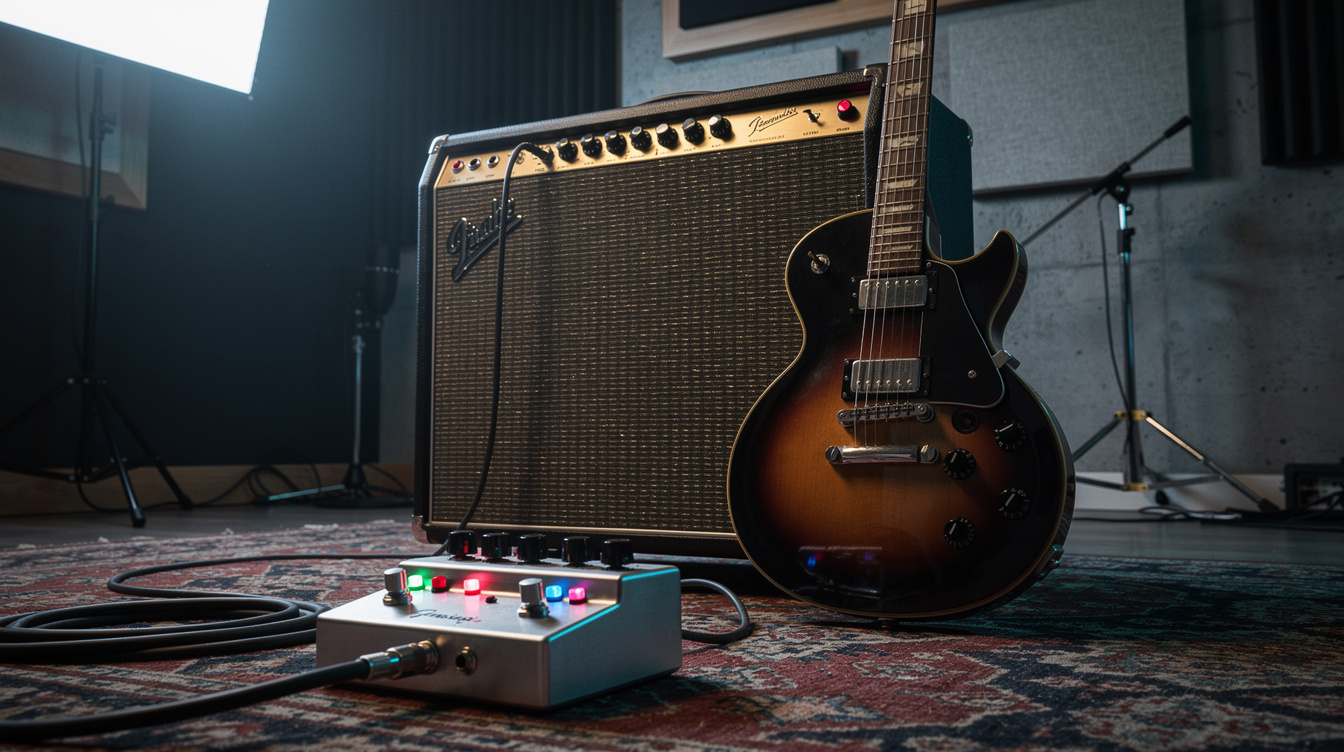
The core issue: Humbuckers output roughly twice the signal level of single-coil pickups, and they have a higher output impedance and a different midrange character. Put the same overdrive setting in front of both and the humbucker effectively doubles the gain, which is why the pedal that sounds like controlled breakup on your Stratocaster becomes a saturated blur on your Les Paul.
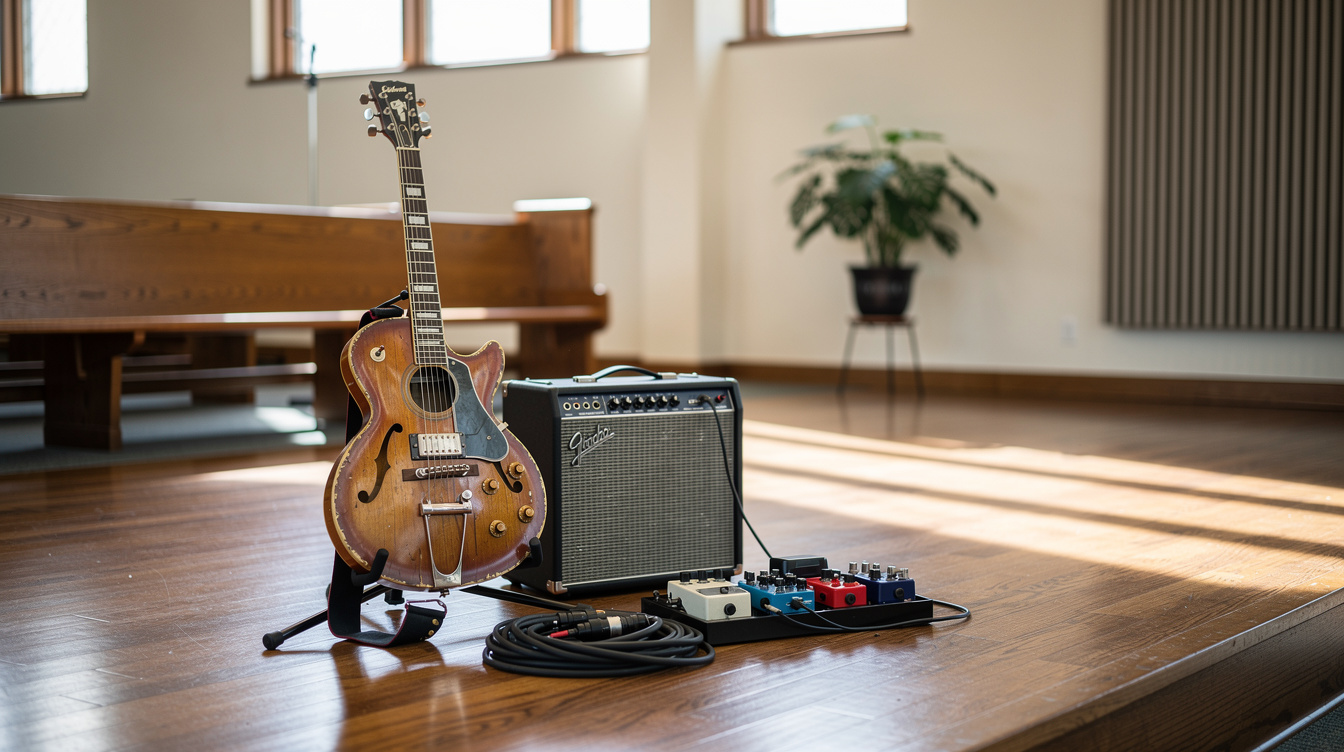
Switch guitars from a single-coil Strat to a humbucker-equipped semi-hollow with the same overdrive settings, and the pedal changes its personality. This isn't a mystery; it's physics. Most overdrive guides treat it as a footnote. It shouldn't be.
The adjustments are straightforward once you understand what's actually happening.
What's Physically Different Between Single-Coils and Humbuckers
Output level. A typical vintage-output single-coil (Strat, Tele) produces somewhere in the range of 130–180mV into a typical load. A typical medium-output humbucker (PAF-style, Seth Lover spec) produces 200–280mV. A hot humbucker (Seymour Duncan JB, DiMarzio Super Distortion) can reach 350–400mV or higher.
Midrange character. Most humbuckers have a pronounced midrange peak, typically somewhere between 700Hz and 1.5kHz, depending on wind count and magnet type. Most Tube Screamer-style overdrives have their own midrange boost centered around 720Hz. These two peaks often stack in a way that feels thick and saturated in a way the single-coil version never does.
Compression at the input. Humbuckers apply more natural compression to the overdrive's input stage. Before the gain control does anything, a humbucker is already hitting the input harder and compressing slightly differently. This changes how the pedal's internal dynamics feel under your fingers.
What Changes in the Pedal's Behavior
When a humbucker hits an overdrive pedal instead of a single-coil, several things happen simultaneously:
The drive control behaves at a higher effective position. A humbucker essentially adds 3–6dB to whatever you've set the drive to. A Tube Screamer at drive position 7 o'clock with a single-coil is effectively behaving closer to 10–11 o'clock with a humbucker. This is why the overdrive that sounds like a clean boost with a Strat becomes full breakup with a Les Paul.
The tone control needs to be recalibrated. Because the midrange peaks of humbucker and overdrive pedal align, the combined frequency response often sounds congested or honky at higher drive settings. The single-coil's naturally scooped midrange creates space that the humbucker doesn't have.
The feel changes more than the volume. This was the actual surprise when I started paying attention to it. I expected my King of Tone to sound completely different through my Collings I-35 (with humbuckers) than through my Jazzmaster (single-coils). The volume and gain level did shift, but the bigger change was feel. The humbucker's natural compression at the input stage interacted with the pedal's compression in a way that changed how notes decayed (more piano-like, less guitar-like). Not bad, just different. And once I'd adjusted the settings to compensate for the level difference, the feel difference became workable rather than problematic.
The Adjustment Protocol
These adjustments apply across most overdrive types. Specific examples are for Tube Screamer-style and Klon-style pedals.
Step 1: Back the drive down
Start by backing the drive control down to where you would normally expect a "clean boost" setting on a single-coil setup. This resets the effective gain level to something close to where you started.
For a TS808 or equivalent:
- Single-coil sweet spot: Drive at 9–10 o'clock (light breakup)
- Humbucker starting point: Drive at 7–8 o'clock to achieve the same effective gain level
Step 2: Pull the tone control back
Because the humbucker's midrange peak stacks with the overdrive's midrange boost, the tone control usually needs to move toward the darker end of its range. On a TS-style pedal, this means tone around 9 o'clock rather than noon. On a Klon-style pedal, the treble control at 8–9 o'clock rather than 10–11.
The target: the note body should feel full without sounding honky or nasal.
Step 3: Adjust volume to compensate
Humbuckers push more signal into the pedal, so the output level often reads higher even after you've pulled the drive back. If the pedal is louder with humbuckers than with single-coils, pull the level control slightly, or use the guitar's volume knob. A humbucker at full volume vs. rolled to 8 produces a meaningful difference at the input of the overdrive.
Step 4: Bridge vs. neck humbucker: different adjustments
This is where players often miss a calibration step. The bridge humbucker is brighter and higher-output than the neck. The neck humbucker is warmer, lower-output, and behaves more like a hot single-coil at the pedal's input.
- Bridge humbucker: Make the full adjustment as described above. The brightness means you may need to pull tone further than expected.
- Neck humbucker: Only partial adjustment needed. Drive can stay closer to your single-coil setting; tone may only need to come back slightly. The neck pickup's natural warmth often sounds genuinely good through a TS at settings that would be too dark for the bridge.
Klon-Style Overdrive: More Forgiving, But Still Needs Adjustment
The Klon-style topology (internal charge pump, asymmetric clipping) generally responds better to humbuckers than TS-style designs because its midrange character is less pronounced. The "transparency" of a Klon circuit means there's less stacking of peaks.
That said, it still needs adjustment. The gain control on a Klon-style pedal with a humbucker:
- Single-coil, light drive: Gain at 9 o'clock
- Humbucker equivalent: Gain at 7 o'clock
- Treble: reduce by 1–2 positions relative to your single-coil setting
The Klon's treble control functions as a shelving boost in the upper-mid range. With a humbucker, pulling it down avoids adding brightness to an already-mid-rich pickup character.
Playing Guitar Volume as a Variable
One approach that sidesteps some of the constant adjustment: use the guitar's volume knob as part of the dynamic. Set the overdrive for where the guitar sounds correct at about volume 8, then roll between 7 and 10 during playing to access different parts of the overdrive's gain range.
With humbuckers, this technique works particularly well because the pickups' natural midrange softens as the volume rolls back. At 7, a bridge humbucker starts to behave closer to a single-coil in terms of how it hits the overdrive's input: less output, slightly different impedance interaction, and a bit more clarity in the top end.
This is the guitar volume knob technique applied to overdrive response rather than fuzz cleanup; same physical principle, different application.
A Reference Table by Pickup Type
| Pickup Type | Drive Adjustment | Tone Adjustment | Level Notes |
|---|---|---|---|
| Vintage single-coil (Strat/Tele) | Baseline | Baseline | Baseline |
| P-90 or single-coil-sized humbucker | Reduce drive ~15% | Reduce tone slightly | Similar to baseline |
| Low-output humbucker (PAF, Seth Lover) | Reduce drive ~20% | Reduce tone 1 position | May need slight level reduction |
| Medium humbucker (JB, Duncan 59) | Reduce drive ~25–30% | Reduce tone 1–2 positions | Roll guitar volume to 8 |
| Hot humbucker (Super Distortion, Nazgul) | Reduce drive ~35%+ | Reduce tone significantly | Use guitar volume as primary gain control |
These percentages are guidelines, not equations. Use them as starting points and listen for where the note body feels right without the midrange congestion that comes from stacked peaks.
The Same Divergence Shows Up Under Reverb
The overdrive input is one place these two pickup types split. Heavy reverb is the other. The same low-mid weight that makes a humbucker stack with a Tube Screamer's mid hump also stacks with a long, high-mix reverb's low-mid buildup — which is why a humbucker chord can go opaque under an ambient wash while a single-coil stays legible. If you're dialing in pad and swell sounds as well as overdrive, what each pickup does under heavy reverb is the companion to this piece: same physics, different effect in the chain.