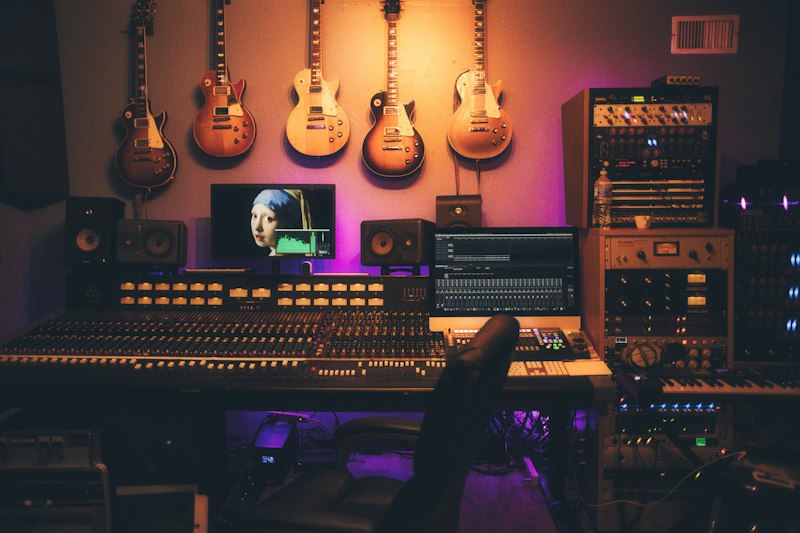
Gibson announced two new Billy Gibbons "Pearly Gates" Les Pauls on November 17. One is a Custom Shop Murphy Lab replica of the 1959 Les Paul Standard itself. The other is a Gibson USA Standard at $3,199. I grew up on Tres Hombres, so I'll tell you straight what's in the box, and then what you can get on your own rig without spending either amount.
The Back Story, Briefly
Gibbons bought the original Pearly Gates in 1968 for $250. The name came from a car he and his bandmates considered lucky. It's a '59 Burst, and it stayed his most trusted guitar for the next five-plus decades. Gibson's line on the new models is that Gibbons has never found another guitar that matches its sound and feel. That's the brief they built to.
Model One: The Custom Shop Murphy Lab Replica
This is the scan-everything version:
- Built from 3D scans of the original guitar, with Murphy Lab aging matched to its actual wear, dings and contours
- Two-piece AAA maple top on a mahogany body
- One-piece mahogany neck with a custom profile taken from the original
- Bound Indian rosewood fingerboard, 22 medium-jumbo frets, aged trapezoid inlays
- Custom humbuckers rebuilt from 3D scans of Pearly Gates' P.A.F.s plus what Gibson calls scientific analysis, wound with plain enamel wire to historic spec
Pricing in the launch coverage is inconsistent. Guitar World's headline says $16k, but its body copy and retailer listings put the Murphy Lab model at $19,999. A separate signed Collector's Edition with a Brazilian rosewood board shows up at retailers for $74,999. That one is a collectible, not a guitar you'll gig.
Model Two: The Gibson USA Standard, $3,199
The Standard is the one most of you will actually be looking at. It comes in Slow Iced Tea Fade with a slightly lighter upper-arm contour and a vintage gloss finish, a AAA figured maple top, and Gibson's Vintage '50s neck profile. It does not get the Murphy Lab aging, the scan-derived parts, or the Custom Shop pickups.
On magnets, the reporting disagrees. Gibson's listing for the Standard specifies Alnico 3 in the neck and Alnico 5 in the bridge, with plain enamel wire. At least one launch report says Alnico 2 and Alnico 5 instead. If the neck magnet matters to your purchase, check the spec sheet at your dealer before you pay. The difference is real: an A3 neck is softer and a little looser in the low end than an A5, and that suits a warm neck pickup.
Getting the Pearly Gates Sound on Your Rig
Here's the thing a $20,000 replica can't sell you. A big share of the classic Gibbons sound is in his hands and his strings, not just the P.A.F.s.
1. The strings are the cheapest part of the tone. Gibbons is famous for very light strings. Our La Grange recipe specs .008–.038. Light strings give a snappier attack and a quicker, thinner transient that flatters a cranked amp, and they make the pinch harmonics jump out. Try a set of 8s on whatever humbucker guitar you own before you try anything else. It changes the feel more than a pickup swap would.
2. Set the amp for a vintage-output pickup. Pearly Gates' P.A.F.s are low-output by modern standards. If you're running a hotter modern humbucker into a Plexi model, you're starting with more gain than he had. In our recipe the Helix chain is the Deranged Master at Boost 8.5 (Rangemaster-style treble boost) into Brit Plexi Brt at Drive 7.5, Mid 7, Treble 6, Bass 5. With a hot ceramic or high-output pickup, start the Plexi Drive closer to 6 and leave the boost where it is. The boost gives you the bite. Too much amp drive just turns into mush under 8s.
3. Don't compress the pinch harmonics away. The recipe uses only a light parallel comp (Ratio 2, Mix 50) for a reason. Squash the front end and those harmonic squeals stop jumping out of the note. If your preset has a heavy compressor first, bypass it for this sound.
4. Use the bridge, and roll the volume down for the verses. P.A.F.s clean up well when you roll back the guitar volume, and that's half of how a three-piece band gets dynamics out of one amp sound. Set your Plexi so it's crunchy at full volume and clears up when you roll back to around 7.
For the slicker '80s sound, our Sharp Dressed Man recipe is the better starting point. It specs a Dean-style solidbody rather than the '59, but the same 8s, which tells you how much of the sound travels with the hands and strings rather than the guitar.
The Verdict
If you collect, the Murphy Lab model is a serious piece of work built from the original guitar, not from memory. If you play, the $3,199 Standard is a good '50s-spec Les Paul with a famous name on it. For the sound itself, though, buy a pack of 8s, back off the amp drive, and pick hard. That gets you a long way toward La Grange for under ten dollars.
Dig Deeper on Fader & Knob
- Billy Gibbons' La Grange Texas Blues Crunch: the full chain, with Helix and other platform translations
- Sharp Dressed Man tone recipe: the Eliminator-era sound
- Overdrive settings with humbuckers: how pickup output changes where drive knobs land
- Best Helix amp models for blues: where Brit Plexi Brt sits among the alternatives


