Carry On Wayward Son
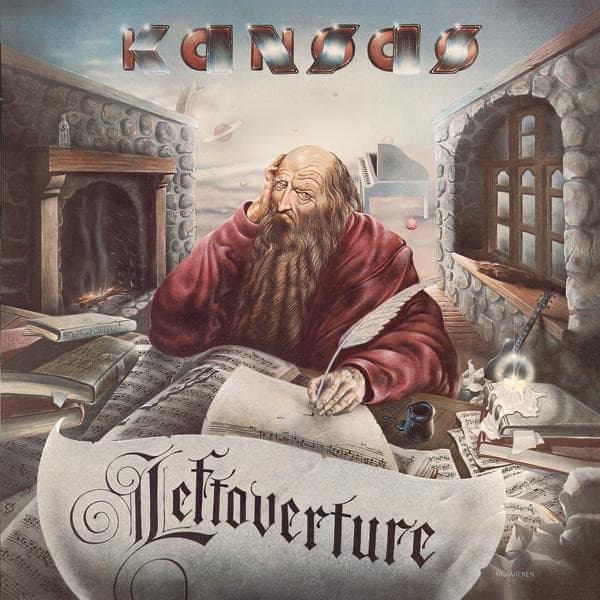
Kerry Livgren's rig on Carry On Wayward Son was disarmingly simple: a guitar straight into a 100-watt Marshall head and one slant cabinet, no pedals, 'no modification of any kind.' Recorded at Studio in the Country in Bogalusa, Louisiana (1976) and produced by Jeff Glixman, the dirty rhythm tone is all cranked-amp grind. Livgren's own main guitar in the Kansas years was a Gibson ES-335, though the exact guitar on this track isn't confirmed and Rich Williams' Les Paul doubled the rhythm. Standard tuning, an Am-pentatonic riff played straight in.
 Leftoverture
What we checked
Computed by a program, on this recipe, every time this page is built. How this works
Preset files — 0 of 3 complete
- Helix 1 block missing from the file
Which ones
Not in the file: Vol/Pan. The recipe calls for this block, but we have no verified model ID for it on this platform, so the preset is written without it. Add it by hand using the settings above.
- Quad Cortex 3 blocks replaced with a stand-in model
Which ones
Replaced with a stand-in: Studio Comp, 4x12 Greenback, Plate. These load cleanly but are not the model named above — the file will sound wrong here until we map them. Set these blocks by hand.
- Katana 3 blocks replaced with a stand-in model
Which ones
Replaced with a stand-in: Brown, Booster, Reverb. These load cleanly but are not the model named above — the file will sound wrong here until we map them. Set these blocks by hand.
What we didn't check
- Nobody played this through a real amp. There is no human listening test behind any number on this page.
- The settings are reasoned from the sources below, not measured off the record.
- No audio has been rendered for this recipe yet, so you cannot hear it before you load it.
- 3 platforms on this page (TONEX, Kemper, Fractal) get a model pointer, not a preset file — nothing was built or checked for them.


