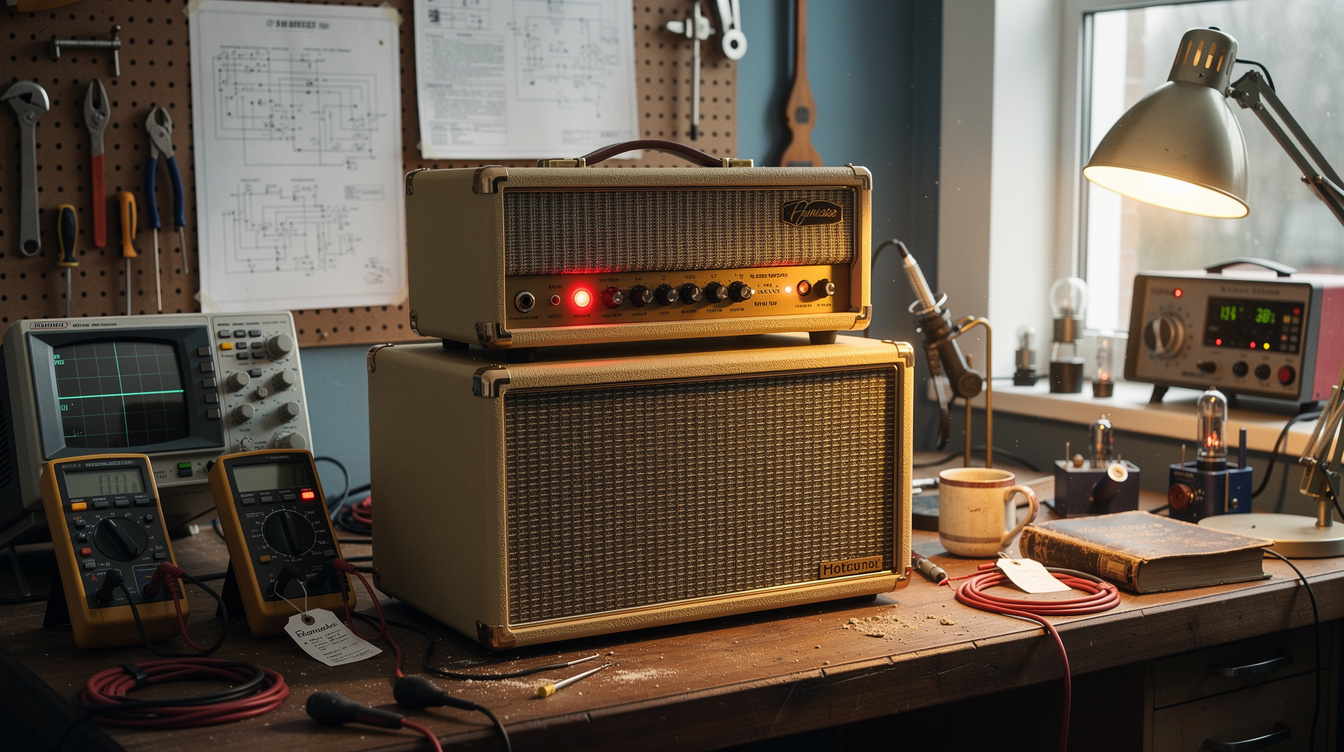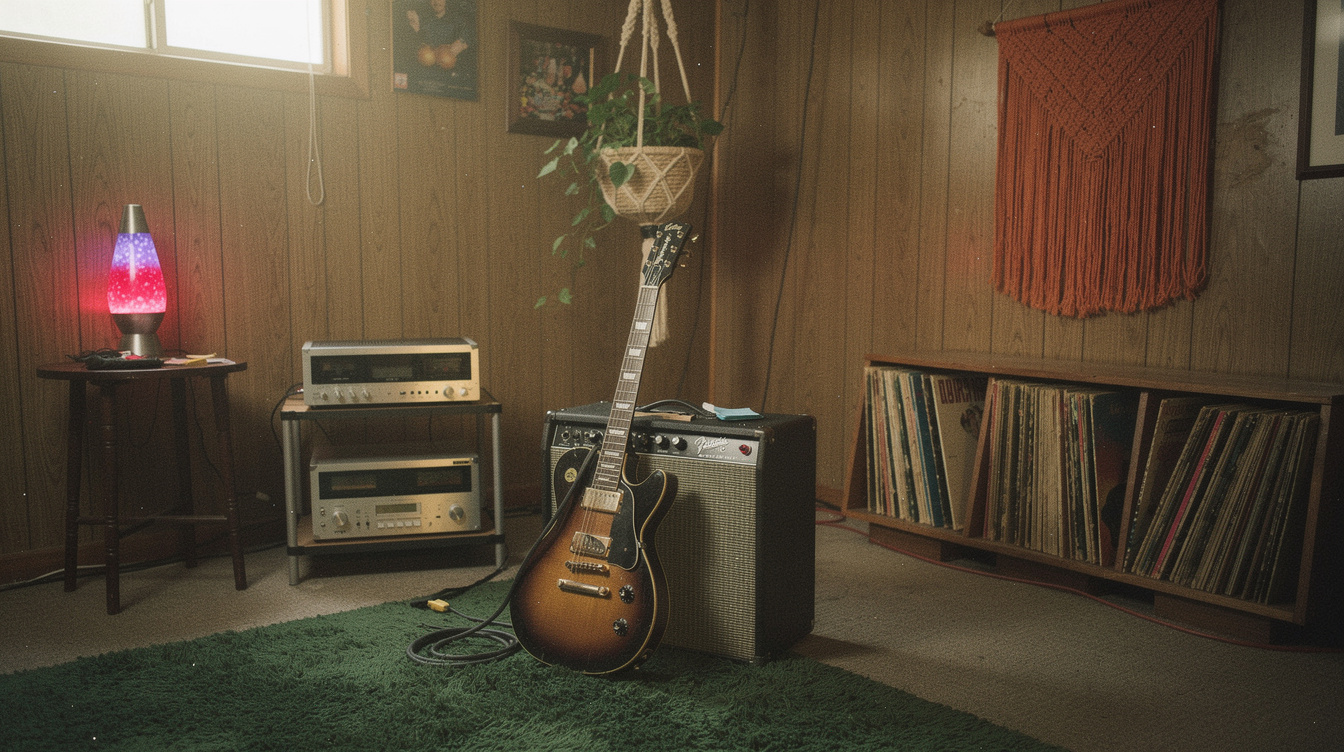
The starting point: Country Telecaster tone is mid-forward, controlled, and clean enough to let the pick attack define the note. Not wide-open bright, not compressed to death, and not scooped. If your tone sounds thin or glassy, you're probably making one of these six mistakes.
Most descriptions of country guitar tone focus on the wrong characteristics. "Snappy." "Glassy." "Clean." None of those words tell you what to actually set. And most online guides recommend scooped mids for country tone, which is incorrect. Nashville players are strongly mid-present. The scooped EQ that appears on country recordings is usually the engineer's doing at the console, not the guitarist's amp setting.
Here's what's actually going wrong in six categories, and how to fix each one.
Mistake 1: Scooping the Mids
This is the most common error. Country players on records sound bright and airy, so most players reach for the EQ and pull the mids down.
What you're hearing on records isn't a scooped amp. It's a mid-present amp recorded and mixed by engineers who know how to create space in a dense track. The guitar's natural midrange is there; the mix processing shapes how it sits.
At your amp, country Telecaster tone needs presence in the midrange. The bridge pickup's natural character is already bright. You don't need to add brightness by removing mids. If you remove the mids, you lose the "cut" that lets the Telecaster sit in a band context and project across a room.
The actual setting: Treble around 6–7, Bass around 5, Mids at 5–6 (flat to slightly above flat). On a Blues Junior or a Deluxe Reverb, this is the stock starting position for country tone. Don't adjust the mids until you've heard what flat does.
Mistake 2: Too Much Compression
A compressor is useful for country tone, but most players set it wrong. They push the ratio up and the sustain up and wonder why the attack is dead.
The purpose of compression for country guitar isn't to even out the dynamics. It's to add sustain and squash to notes past the initial attack, while preserving the snap of the pick hitting the string. The snap is the whole point. That percussive initial transient is what makes a chicken-pickin lick land.
A compressor with a fast attack setting kills the snap. The transient gets smoothed out before you hear it. Set the attack slow enough that the initial pick attack passes through before the compressor engages, then let the sustain body be shaped.
The actual setting: Attack slow (7–8 o'clock on a typical compressor, or 40–60ms if the pedal uses milliseconds), Release fast enough to track individual notes (9–10 o'clock), Sustain or Ratio at about 3–4:1, Level to unity. The compressed body of the note should feel longer and richer, but the first milliseconds of pick attack should still be there.
The best compressor setting for country chicken-pickin feels like the note is being pushed forward, not flattened. If you lose the snap, the attack is too fast.
Mistake 3: Bridge Pickup, Always
Country guitar is usually associated with the bridge pickup on a Telecaster. That association is correct for the bright, twangy cut, but it's incomplete.
Nashville players use the middle position (both pickups) constantly for mid-tempo strumming and rhythm parts. The middle position on a Telecaster (bridge and neck together) drops the bridge pickup's brittle top edge and fills in the lower midrange the bridge alone leaves empty, so open chords hold together instead of splaying apart. On a clean amp it is the difference between a chord you notice and a chord that just sits under the vocal.
The bridge pickup is primarily for lead lines, specific rhythm accents, and the characteristic chicken-pickin snap. Running it exclusively for every part makes the tone one-dimensional. The neck pickup (rarely used for country) adds body when needed for slower, more melodic lines.
For any country part where you're playing in a full band and chords need to blend rather than cut: try the middle position before reaching for the bridge.
Mistake 4: Volume at Full, All the Time
Running the guitar volume at 10 continuously is the right choice for a lot of music. For country tone, it's often wrong.
The Telecaster bridge pickup at full volume through a clean amp can sound brittle (not the good bright, but the sour bright). Rolling the guitar volume to 7 or 8 changes the pickup's impedance interaction with the amp and slightly reduces the higher overtones that create that brittle quality, while keeping the note definition and snap intact.
This is one place where the cheap thing costs nothing and adds a lot. Try rolling the volume to about 7.5 and playing a chord through a clean amp. The tone should feel rounder at the top end while the fundamental stays clear. If it sounds correct at 7.5, that's your volume knob position. Not 10.
The other setting worth adjusting: if your Telecaster has a tone knob, try it at about 7–8 rather than 10. The tone knob at full bypass on a Telecaster can sound overly crisp with the bridge pickup. At 7–8, there's still clarity but the high-frequency edge is slightly rounded.
Mistake 5: Too Much Amp Volume
Country tone lives at the clean edge of the amp, just touching the verge of breakup, not sitting comfortably clean. The difference between a clear clean tone and a tone that's barely touching the front end of the amp's natural compression is significant. The second one has more sustain, better string-to-string definition in chords, and that slight push-back quality that makes notes feel like they're being launched, not just produced.
On a Fender Blues Junior: Volume around 4–5 gets you to the right edge. On a Deluxe Reverb: Volume at 3–4 on a standard guitar volume setting.
The common mistake is running the volume lower to avoid any breakup character, which produces a flat, unresponsive clean tone. Country tone has life in it; it doesn't sit still. That life comes from the amp being slightly engaged, not fully clean and quiet.
Mistake 6: Treating the Capo as Only a Key Change
Country guitar uses the capo more than almost any other style. Most players put it where the singer's key demands and stop thinking about it. That is half a decision.
A capo changes which open strings ring under your chords. At the second fret they ring as F sharp, B, E, A, C sharp, F sharp. At the fifth fret they ring as A, D, G, C, E, A. Those are the pedal tones underneath everything you play. They are not the same, and there is usually more than one capo position that gets you to the singer's key.
A capo also raises the lowest note the guitar can make by one semitone per fret. At capo 5 your bottom string is an A. You have handed away the bottom of the instrument. In a band with a bass player and a second guitar that is often exactly right. Alone on a stage it is not.
The practical rule for country rhythm. If you are the only guitar, stay at 3 or below. If another guitar is covering open position, go to 4 or 5 and play fewer strings, higher up. Two guitars at the same capo position playing the same shapes are one loud guitar with a phasing problem.
One more thing worth checking before you blame your amp. A capo clamped too hard pulls the strings sharp, and the plain G and B go first. If chords sound sour with the capo on and fine with it off, that is a clamp problem, not a tone problem. There is more on this in capo position as a tone decision.
How to Tell Which Mistake You Are Making
The table below maps symptoms to causes. This is the four-minute procedure to find which symptom you actually have. Do it in this order, because each step rules out the ones after it.
- Play a first-position chord with the compressor off and the guitar volume at 10. If it already sounds thin and does not project, the problem is the amp EQ. Go flatten the mids. Nothing downstream will fix a scooped amp.
- Roll the guitar volume to 7.5 and play the same chord. If the harshness leaves and the note stays clear, that was your problem and it costs nothing to fix. If nothing changes, keep going.
- Turn the compressor on and play a single-note line with hard pick attacks. Listen to the first instant of each note, not the body. If the attacks sound blunted or all the same size, the attack setting is too fast.
- Turn the amp up a step and play the same line. If the notes suddenly feel like they are being pushed rather than just produced, you were running too clean. If it just gets louder, you were already at the edge.
Whatever changed at each step is the setting that was wrong. Change one thing and listen. Changing three at once is how players end up back where they started with a different set of numbers.
Quick Reference: Common Mistakes and Fixes
| What's Wrong | Likely Cause | Fix |
|---|---|---|
| Tone sounds thin, no projection | Mid-scooped EQ | Flatten the mids to 5–5.5 |
| No pick attack / "snap" | Compressor attack too fast | Set attack slower (40–60ms) |
| Tone sounds one-dimensional | Always using bridge pickup | Use middle position for rhythm parts |
| Bridge pickup sounds brittle | Guitar volume at 10 | Roll volume to 7–8 |
| Tone sounds flat and lifeless | Amp volume too low | Push amp volume into the clean edge |
| Chords sour with the capo on, fine with it off | Capo clamped too hard | Back the tension off, check the G and B strings |
| Guitar disappears under the other guitarist | Both players in the same capo position | Move one player to capo 4 or 5 |
The Telecaster's Built-In Advantage
The Telecaster's brass or steel saddles, the geometry of the bridge pickup mounting close to the body, and the single-cutaway body resonance create a physical tone characteristic that's already pointed at country tone. You don't have to work hard to get there.
What you're adjusting when you dial in country tone is refinement, not construction. The raw material is already correct. The five mistakes above are all additions, things added on top that push the tone away from where it naturally wants to go.
The Nashville session players I describe in my Nashville Session Clean: Tele + Compressor post are using light-gauge strings, light compression, and a clean amp set slightly hot. That's the entire recipe. Everything else is reduction, not addition.
If the right hand is the part that isn't landing rather than the settings, chicken-pickin foundations covers the technique the compressor settings above exist to serve.