Start Here: This is a direct tone comparison between the PRS Silver Sky and the Fender American Professional II Stratocaster, focused specifically on clean tone: the crystal, harmonically rich single-coil clean that Mayer has defined across three decades. If you want the verdict upfront: the two guitars are closer than the price difference suggests, and the one that sounds "more Mayer" depends almost entirely on which Mayer you're trying to get. The comparison table and recommendation are in The Verdict section if you'd rather skip to the end.
What We're Actually Testing
Asking "which guitar sounds more like John Mayer" is a slightly odd question because Mayer himself has played both extensively. The Silver Sky was co-designed with Paul Reed Smith based on his love of vintage Strats. It isn't trying to be different from a Stratocaster; it's trying to be a refined version of one.
So the comparison here isn't "PRS sound vs. Fender sound." It's more specific than that: given the same amp, the same signal chain, and the same two-handed technique, which guitar produces a cleaner, more harmonically rich rendition of that particular style: the neck pickup glass, the mid-position shimmer, the bridge pickup that bites without shredding?
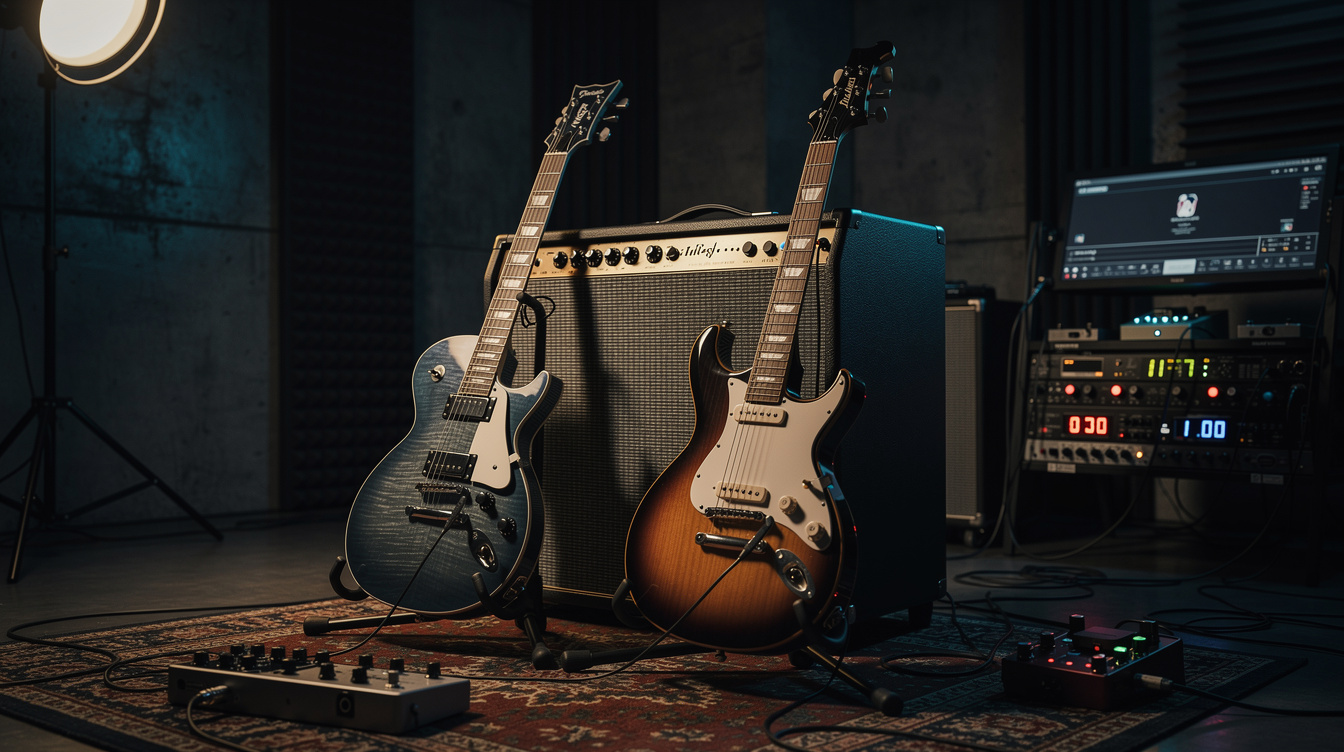
The amp I ran both through was a Fender '65 Deluxe Reverb Reissue (appropriately mid-forward, with natural compression at moderate volumes). Both guitars ran direct into the amp with no pedals. Pickups on both were set at factory height. Strings were 10s, freshly wound on each guitar the morning of the session.
The Guitars
PRS Silver Sky (Sea Salt color, maple fretboard, 2023)
The Silver Sky's pickups are PRS's own 635JM single-coils, designed alongside Mayer with the specific goal of reducing 60-cycle hum without the tonal compromise of a standard humbucking stack. They're quieter than a vintage Strat pickup in a meaningful way. On stage through a high-gain amplifier in a noisy environment, the difference is audible. In a recording or home playing context, it's less relevant.
The neck radius is 7.25" (vintage Strat spec), which many players find too curved for modern technique but which gives the low-action chord playing that Mayer favors a distinctly slippery feel. Fret ends are immaculate.
Fender American Professional II Stratocaster (Olympic White, rosewood board, 2022)
The AmPro II Strat uses Fender's V-Mod II pickups, which are staggered pole piece designs that balance output between strings better than traditional flat-pole designs. They don't sound vintage; they're voiced more aggressively in the upper mids than a true vintage pickup, which affects clarity but also bite.
The radius here is 9.5", which is more forgiving for modern playing styles. The neck profile (Deep C) feels larger in the hand than the Silver Sky's slightly smaller neck.
How They Sound: Position by Position
Neck Pickup
The Silver Sky's neck pickup has a particular quality I wasn't expecting on first play. It's softer in the upper harmonics than the AmPro II, which means the fundamental note blooms before the overtone texture arrives. The result is something like the quality of watching a candle catch: the first touch of the note is clean, almost warm, and the sustain adds complexity as it unfolds. Through the Deluxe Reverb at moderate volume, chord voicings in this position sounded genuinely luminous. That's the word. There was a sweetness in the midrange around 1–2 kHz that made minor seventh chords ring rather than ring and decay.
The AmPro II's neck pickup is different in character: brighter, more assertive in the attack phase, with the high-end overtones arriving immediately rather than blooming. It's not better or worse; it's a different tonal story. The AmPro II neck pickup sounds more present and more articulate in a band context, but it loses some of the dreamy, overtone-rich quality that makes solo guitar playing in that position so satisfying.
Mayer match for neck position: Silver Sky.
Middle Pickup
Both guitars are close here. The middle pickup is the least differentiated position on a Strat, and both of these sounded appropriately glassy and chime-y. The Silver Sky remained slightly softer in the attack; the AmPro II remained slightly more assertive. Through the Deluxe Reverb with the tremolo engaged, the difference was almost inaudible.
Mayer match for middle position: Essentially tied, slight edge to Silver Sky.
Bridge Pickup
This is where I expected the most difference, and the reality surprised me. The Silver Sky's bridge pickup has more output than I expected. It's not as bright or thin as a vintage single-coil bridge position, and in the playing context where Mayer uses the bridge (the "Vultures" attack, the Born and Raised country-adjacent leads), it has a quality that's genuinely assertive without becoming harsh. It bites. There's some tension there that feels intentional.
The AmPro II bridge is harder. The V-Mod II pickup voices the upper mids more aggressively, and the result is a bridge pickup that sits somewhere between a vintage single-coil and a vintage-voiced humbucker in terms of edge. For a lot of playing styles, that's an improvement. For the specific Mayer context, it's slightly past the threshold of polished and into something more raw.
Mayer match for bridge position: Silver Sky, narrowly.
In-Between Positions (2 and 4)
The Silver Sky excels in these positions. Positions 2 and 4 on a Stratocaster are where that quacky, out-of-phase shimmer lives: the sound on "Neon," the Trio material, the lighter-touch studio work. The 635JM pickups clean up beautifully in these positions, and there's a particular high-mid clarity in Position 2 (bridge + middle) that I associate with the most polished, refined version of the Mayer clean tone.
The AmPro II is also very good in these positions. The upper-mid emphasis that the V-Mod IIs add becomes more of a feature here than a liability; it adds a sharpness to the quack that works well at any volume.
Mayer match for in-between positions: Silver Sky.
The Verdict
| Category | PRS Silver Sky | Fender AmPro II Strat |
|---|---|---|
| Neck pickup tone | Warm, bloomy, luminous | Bright, assertive, clear |
| Bridge pickup tone | Controlled bite, refined | More aggressive, rawer |
| In-between positions | Excellent quack, clean high-mids | Sharp, slightly more aggressive |
| 60-cycle hum | Noticeably less | Standard single-coil noise |
| Ergonomics | 7.25" radius, smaller neck | 9.5" radius, Deep C profile |
| Street price (as of April 2026) | ~$2,299 | ~$1,499 |
| Overall Mayer tone match | Better for Continuum and Born and Raised | Better for louder, live-forward contexts |
If you're chasing the Continuum-era clean tone (the polished, recording-studio version of the Mayer sound, with its harmonic bloom and warmth), the Silver Sky is closer. The 635JM pickups are genuinely voiced for that, and the 7.25" neck radius makes the rhythm playing feel appropriately loose and effortless.
If you're playing live in a band context and need the Mayer tone to cut through without adding signal chain complexity, the AmPro II Strat holds its own and does so for $800 less. The increased upper-mid presence helps in live contexts where the Silver Sky's refinement can translate to softness.
The honest version of this comparison: the Silver Sky is a more expensive guitar that makes the Mayer clean tone easier to access. The AmPro II is a genuine Stratocaster that can get there with slightly more effort in the playing: lighter touch, more guitar volume management, a smidge more from the amp. Which matters more depends on how much the gap in approach costs you.
A Note on Pickups
If you own an American Professional II and find yourself wanting more of the Silver Sky character, PRS makes the 635JM pickups available separately. The installation isn't trivial, but the pickup character (particularly the neck pickup) is the largest single variable between these two guitars.
Conversely, if you own a Silver Sky and find yourself wanting more bite and aggression in live contexts, the 7.25" radius and smaller neck aren't addressable without a new guitar. The pickup character is what it is. That's worth knowing before you spend $2,299 expecting to dial in a more aggressive live tone.
Frequently Asked Questions
Is the PRS Silver Sky worth $800 more than a Fender American Professional II Strat? Worth is personal, but tonally they're closer than the price gap suggests. If you play mostly at home or in recording contexts and value the refined clean tone the Silver Sky produces, yes. If you play live and need the tone to cut, the difference matters less.
Do both guitars require the same amp settings for the Mayer clean tone? Roughly. The Silver Sky benefits from slightly more amp bass; its pickups naturally roll off some low end that the AmPro II retains. Start with the same amp settings and adjust bass +1 on the Silver Sky if it feels thin in the low end.
Can you get the Silver Sky tone from a cheaper Strat? You can get close with a Squier Classic Vibe or a Player Series Strat, but the pickup quality is the limiting factor. The 635JM pickups produce a specific bloom and harmonic quality that lower-output stock pickups in those guitars don't match.
What about the John Mayer Signature Fender Strat? The original JM Signature (from the early 2000s) uses BigDipper pickups that are actually mid-scooped by design (useful for his older Two-Rock tone but different in character from what the Silver Sky is doing). The more recent JM Signature has different specs. If you're specifically after Continuum-era tone, the Silver Sky is a more intentional design choice.
Does the PRS Silver Sky work for other styles besides Mayer tones? Yes. The 635JM pickups are versatile, and the guitar itself is a refined Strat-style instrument. It works for anything a Stratocaster works for: blues, country, R&B, indie rock. The refinement in the neck and bridge pickups is a feature, not a limitation.