The short version: A single-pickup guitar removes the choice of which pickup to use, and in doing so, forces you to get the range you want from the one pickup you have. Most players find, after a few weeks with a single-pickup instrument, that they were using the pickup selector as a substitute for dynamics and touch. The guitar teaches you something. You keep using what it taught when you go back to your regular instrument.
I've played the same Telecaster for 29 years. Two pickups, one selector switch, bridge position roughly 80% of the time. I say that because it's relevant: even with two pickups, I've spent most of my playing life working from one position and trying to get the range I needed from how I played rather than which switch position I was in.
A single-pickup guitar makes that approach mandatory. Some people find that irritating. I find it clarifying.
The Guitars
Les Paul Junior
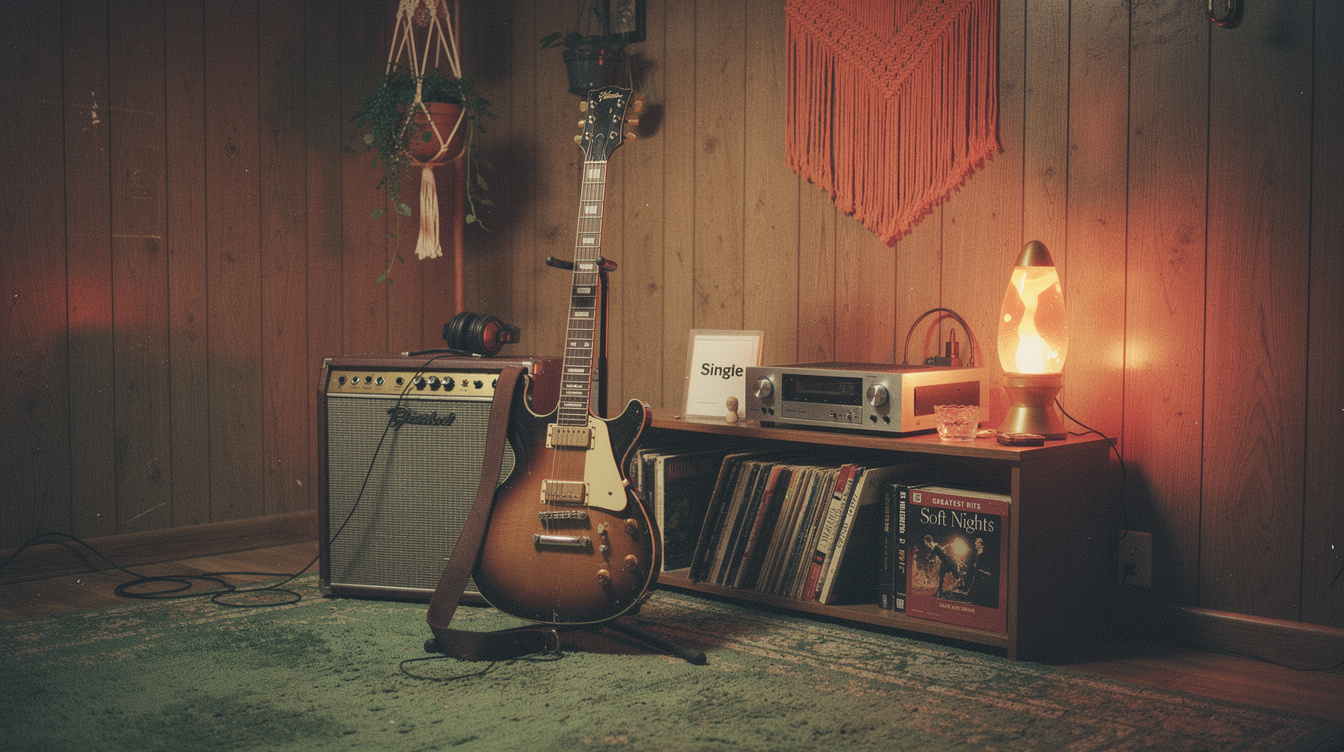
The Les Paul Junior was Gibson's student-market instrument when it launched in 1954: a single-cutaway solidbody with one P-90 pickup in the bridge position, one volume, one tone, and a wrap-over tailpiece. No neck pickup. No rhythm circuit.
Leslie West played one through Mountain's entire first era. His tone on "Mississippi Queen" (that big, thick, slightly overdriven sound) is a single P-90 into a cranked amp. No switching, no layering, no complexity. Neil Young has played Junior-style instruments throughout his career. Billy Joe Armstrong has used one live. Each of them gets a wide tonal range from a guitar that offers zero selector options.
The P-90 in the bridge position on a Junior sits in an interesting tonal sweet spot: it's brighter than a neck humbucker, fuller than a standard bridge single-coil, and responds to the volume knob in a way that's unusually expressive. At full volume and pick position near the bridge, it's cutting and aggressive. Roll the volume back to 6–7 and move your picking hand toward the sound hole, and the top end backs off far enough that the note reads like a neck pickup you do not have. Not identical. Close enough that nobody in the room is checking. How P-90s behave under different overdrive circuits is covered in the P-90 and overdrive guide.
Gibson SG Special
The SG Special comes in various configurations, some with two P-90s and some with a single neck or bridge pickup. The single-pickup SG Special occupies similar territory to the Junior: P-90 character, one control circuit, one thing to think about.
The SG body's lighter weight changes the feel of the instrument relative to the Les Paul shape. For some players this makes sustained notes feel different; the guitar resonates differently in the hand. Same tonal logic, different body interaction.
Fender Esquire
The Esquire is the single-pickup Telecaster: one pickup in the bridge position, the same unit that appears in the standard Telecaster, but without the neck pickup. Esquires have a three-way switch, and it confuses people, because it looks like a pickup selector on a guitar with one pickup.
It selects circuits.
| Switch position | What is in the circuit | What you hear |
|---|---|---|
| Rearmost, toward the bridge | Tone control bypassed entirely | The brightest and loudest of the three, brighter than the middle position with the tone knob wide open |
| Middle | Volume and tone both working | A standard Telecaster bridge pickup |
| Forward, toward the neck | Fixed treble roll-off network, tone control bypassed | Dark and slightly quieter, a preset rather than a control |
That forward position is the one worth knowing about. Leo Fender put it there as a bass sound, so a player in 1950 could flip a switch and cover bass parts. Nobody uses it for that now. What it is good for is a preset dark tone you can reach without turning a knob, which on a guitar with one pickup is the closest thing to having a neck position.
Worth knowing that the recipe changed. Positions one and two stayed put through the whole original run, but Fender revised the component values in the forward position several times before production ended in 1969, and there was a capacitor-only version for a while. So two Esquires can behave differently in that third position and both be stock.
The Esquire teaches a different lesson than the Junior. Instead of learning range from one magnetic source, you learn to use the amp's input and your picking position to produce that range. The Esquire bridge pickup is less forgiving than a P-90, brighter and more aggressive by nature, which means the amp and your hands do more of the tonal shaping.
What the Volume Knob Becomes
On a multi-pickup guitar, the volume knob is mostly used to set overall level. Ride it somewhere comfortable and leave it.
On a single-pickup guitar, the volume knob becomes the primary tonal control.
This is because there's no other escape valve. If the tone is too bright at full volume, you have two choices: roll back the tone knob (which affects frequency content), or roll back the volume knob (which also affects input to the amp, which changes how the amp responds, which changes the tone in a different and often more musically useful way).
Rolling the volume back on a single-pickup guitar at the edge of amp breakup doesn't just reduce level; it reduces the signal driving the amp's input stage, which pulls the amp back from breakup. You can clean up an edge-of-breakup tone by rolling to 7, and you can push into heavier overdrive by going to 10. This is the same thing SRV was doing with his Strat volume knob, or what Brian May does with his Red Special, or what Jimmy Page does with his Les Paul. None of those are single-pickup guitars, but the principle transfers.
On a single-pickup guitar, you don't have the option of reaching for the neck pickup to clean things up. So you learn to clean things up with the volume knob instead. Then you take that instinct back to your regular instrument and suddenly you're using the volume knob the way it was meant to be used.
What Picking Position Does
Most players pick roughly in the same spot, somewhere between the sound hole and the bridge, settled by habit. Move that picking position deliberately and listen to what happens.
Pick very close to the bridge: thin, bright, aggressive. The kind of sound useful for defined lead lines and cutting rhythm work.
Move toward the twelfth fret: fuller, rounder, more midrange weight. Not neck-pickup territory, since it keeps the bridge position's edge on the attack, but the body of the note fills in behind it the way it does on a neck pickup.
On a single-pickup guitar, this physical movement is one of your primary tone shaping tools. There is no neck pickup to retreat to. So you develop the skill of moving your picking hand, consciously, as a musical decision rather than a default.
This is how early session players approached guitar before multi-pickup instruments were common. It's how Albert Collins played the snappy, attacking blues tone he got from a Telecaster with the neck pickup removed. That's not a design accident; Collins specifically preferred working from one position.
There is more on how far that hand movement actually goes in the picking hand position guide.
Pickup Height Is the Setting That Matters Most Here
On a guitar with three pickups, one set badly is an inconvenience. You use a different position and get on with it.
On a guitar with one pickup, there is nowhere to go.
This makes height the most consequential setup decision on the instrument, and it is the one nobody makes. A P-90 in a Junior is a strong magnet sitting close to the strings. Set it too high and it pulls on the string hard enough to change how the string moves. Fender's own setup guidance describes what that does: the string starts vibrating in an elliptical pattern instead of a circular one, and you lose harmonics and sustain.
You will hear it first on the wound low strings. The pitch wobbles a little after the attack and the note dies early.
Start from the published number for your pickup type and set the rest by ear. Gibson currently publishes 1.6mm for a bridge humbucker and 2.4mm for a neck humbucker. Fender publishes 2.0mm on the bass side and 1.6mm on the treble side for a Stratocaster bridge pickup, measured from the top of the pole piece to the bottom of the string with the last fret held down. A hot P-90 usually wants more room than either figure, because a stronger magnet pulls harder at the same distance.
The by-ear method is the one that matters. Drop the pickup well away from the strings and listen to the note ring with the magnet out of the way. Raise it until you can hear the magnet start to grab. Back it off from there.
Two things happen when you get this right on a one-pickup guitar. The obvious one is that sustain comes back. The one I did not expect is that the volume knob starts working better through its whole range, because you are no longer fighting a magnet that was flattening the top end before the signal ever reached the pot. The clean-up trick at 7 only works if there are harmonics left to clean up.
If a note on your Junior has been wobbling and you assumed it was the guitar being a cheap student instrument, it probably is not. The full diagnostic, including how to tell magnet pull apart from a worn fret and a bad nut slot, is in the magnet pull post.
Settings That Work Well
The single-pickup guitar's range depends heavily on the amp. You want something that responds to input level, one that cleans up when the guitar volume is at 7 and drives when it's at 10.
A clean amp with enough headroom for this range of input:
At these settings, the amp is at the edge of breakup with the guitar volume at 10, clean at 7. This is the entire dynamic range of the single-pickup guitar living in one amp setting.
For a Tube Screamer or similar mid-hump overdrive used as a boost:
The drive is intentionally low; you're pushing the amp's front end, not using the pedal for distortion. The Tube Screamer's mid-hump character pairs well with the P-90's output level, adding definition without obscuring the pickup's inherent character. If you have humbuckers on a single-pickup guitar (some SG Specials) or want a different overdrive circuit, see the notes in the TS808, Klon, and RAT with different pickups post.
The Week-Long Experiment
Before you decide a single-pickup guitar is limiting, try this: take your regular guitar, tape the selector switch in the bridge position, and don't touch it for a week. Play your usual material. Use the volume knob and your picking position as your only tonal tools beyond the amp.
Most players who try this come out the other side with a different relationship to their guitar's controls and a clearer sense of what they actually need versus what they've defaulted to having. Some of them then buy a Les Paul Junior. That's fine. But the lesson usually sticks regardless of what happens next.
A tool with fewer options isn't always a compromised tool. Sometimes it's a clearer one.