Stand in front of a loud Marshall, hit a note, find the sweet spot on the stage, and the amp will hold that note forever. That's feedback, and it's been the secret behind singing lead tones since Clapton and Santana. The problem is it needs a cranked amp and the right square foot of floor. A sustainer does the same thing with a battery and a driver in your guitar — at any volume, every time, hands free. The question is whether it's worth cutting a hole in a good guitar to get it.
What a Sustainer Is
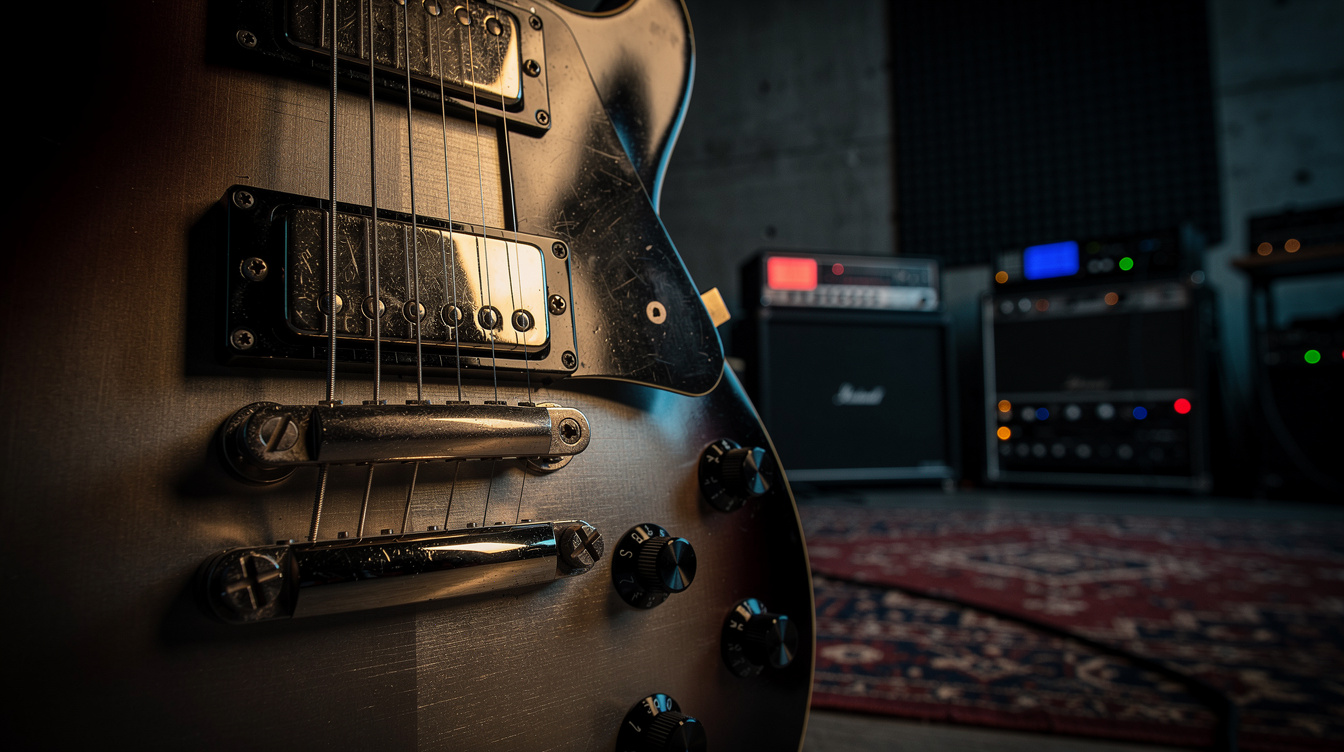
It's a powered coil mounted where your neck pickup goes. It listens to your bridge pickup and pushes the strings back, driving them the way air from a loud speaker does. The note doesn't decay. You hold it as long as you want.
Most systems give you two flavors. Normal mode sustains the fundamental — the note you played, held flat. Harmonic mode drives the overtone instead, so the note blooms up into a harmonic, the way a Plexi does when you lean into it. There's usually a mix setting between them. You switch with a small toggle and run the whole thing off a 9V battery.
This is not the same animal as an EBow, which you hold in your picking hand over one string. A sustainer is built in, hands-free, and works on more than one string at a time.
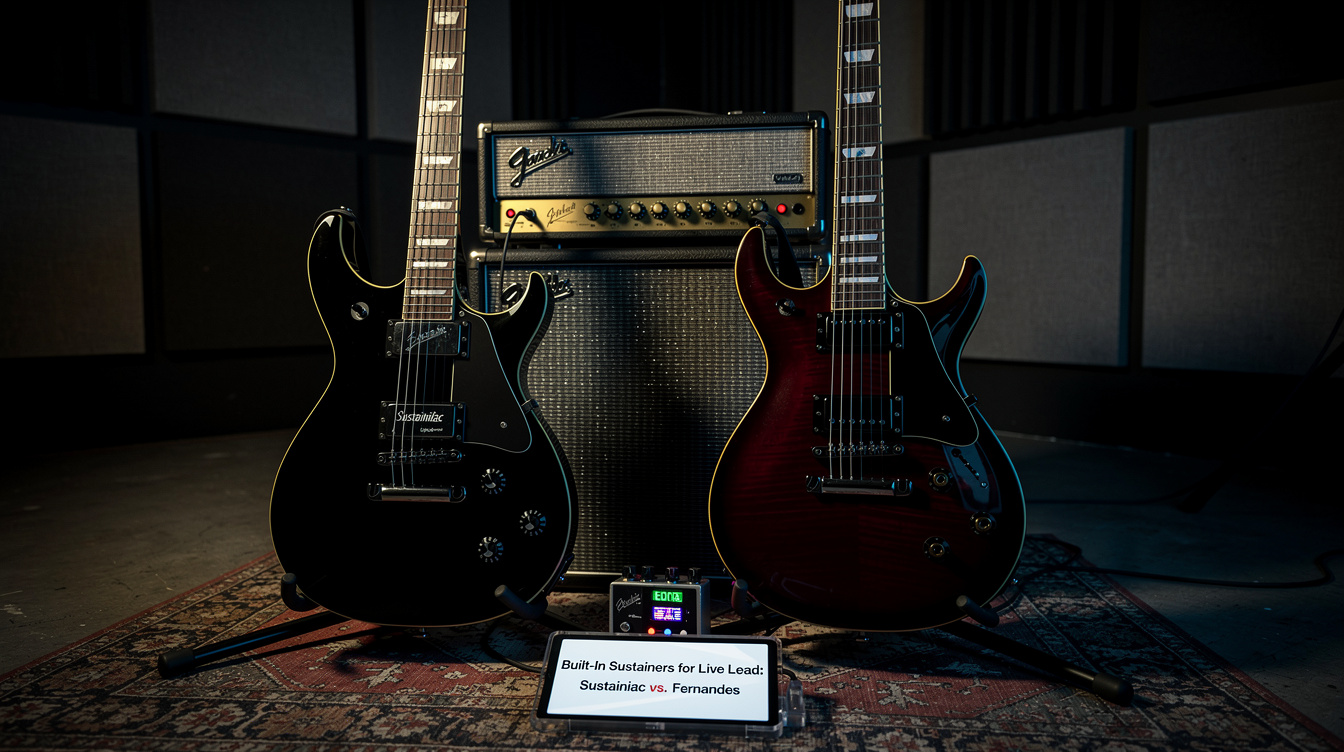
Sustainiac vs. Fernandes
| Sustainiac Stealth PRO | Fernandes Sustainer | |
|---|---|---|
| Available new | Yes — the standard retrofit kit | Rarely; scarce on the new market for years |
| Modes | Normal, Mixed, Harmonic | Normal, Harmonic |
| How you find it | Buy the kit, install it | Usually already in a Fernandes guitar, or used |
| Driver as a pickup (off) | Thin single-coil-ish neck tone | Similar — thin neck tone |
| Power | 9V battery | 9V battery |
| Street price (mid-2026) | Around $200–230 for the kit | Used market, varies |
Here's the honest state of it. Both systems do the same job, and people who've used both will argue the tone for hours. But if you're retrofitting a guitar today, the Sustainiac is the one you can put in a cart. Fernandes as a brand has been quiet for a long stretch, and their sustainer kits dried up on the new market years ago. You'll find the Fernandes system in their old Ravelle and Native guitars, or used, and that's about it. So for most people the comparison isn't really a comparison — it's "the one that's for sale."
What the Install Actually Costs You
A sustainer is active electronics. That means a battery cavity, a circuit board, a mode switch, and an on/off switch, all crammed into the guitar. If you can solder and you're comfortable routing, it's a weekend job. If you can't, factor in a tech — a hundred bucks or so on top of the kit.
But the real cost isn't the labor. I went into this assuming the driver would be a wash as a pickup — a neck pickup is a neck pickup, right? Wrong. With the sustainer switched off, that driver is a thin, glassy thing. No woof. No body. Next to a real PAF in the neck it sounds like a different, lesser guitar. If your bread and butter is a fat neck-humbucker clean — your "Wish You Were Here," your jazz chords — this install takes that away. You're trading your neck pickup for a feature.
That's a fair trade for a bridge-pickup lead player. It's a bad trade for somebody who lives on the neck. Know which one you are before you pick up the router.
Why You'd Actually Want One
The surprise, once it was in, was Harmonic mode. I figured a sustainer was a way to fake feedback for people who can't turn up. What I found was more useful than that. Hold a note in Harmonic mode and it doesn't just sit there — it climbs into the octave above, slow and singing, the exact move you spend a whole solo chasing in front of a cranked amp. Except it does it on the first note, sitting down, with the master volume at two. Every time. That's not faking feedback. That's feedback you can rely on, which is something a stage never gives you.
For live lead, that reliability is the point. No hunting for the spot. No praying the room cooperates. You hit the switch and the note sustains, both hands still on the guitar, whether you're in an arena or a coffee shop. If you want the natural version and the physics behind why it's so finicky, that's a different conversation about feedback on stage — the sustainer exists precisely because that version is unpredictable.
So Should You Install One?
Install a sustainer if you play bridge-pickup leads, you want hands-free infinite sustain at any volume, and you've got a guitar you don't mind modifying — ideally a second guitar, not your number one. The Sustainiac is the kit to buy. Budget for the install if you don't solder.
Don't install one if your neck pickup is sacred, if the guitar is too nice to rout, or if you just want to hear what controlled sustain feels like before committing. In that last case, buy an EBow first. It's cheaper, it's reversible, and it'll tell you in an afternoon whether infinite sustain is something you'll actually use or a trick you'll get bored of in a week. Plenty of players find out it's the second one. Better to learn that for fifty bucks than for a hole in a Les Paul.