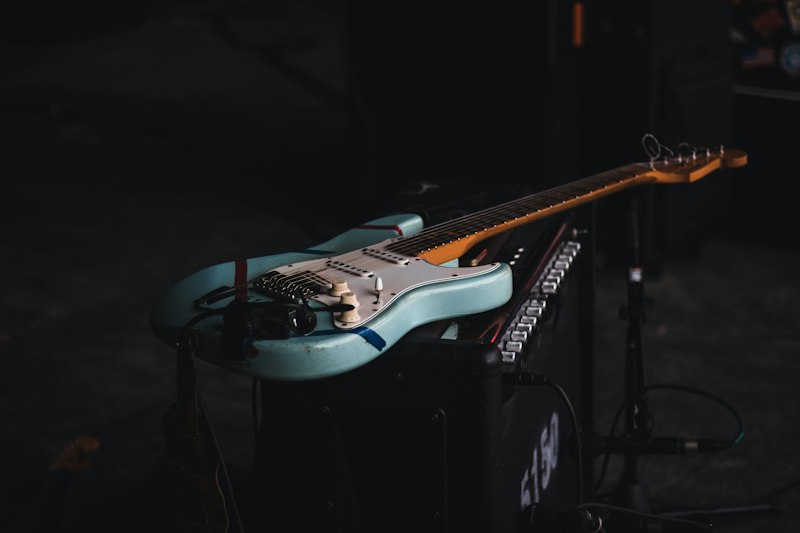
Gibson and Baggs announced a new acoustic pickup system this week called HiFi DNA, and I want to get past the marketing line about studio-grade live tone quickly, because there is one design decision underneath it that genuinely matters for anyone who plugs an acoustic into a PA on a Sunday morning.
Here is the system as announced:
- Two sensors inside the guitar — one focused on the bass strings, one on the treble strings.
- Each sensor gets its own discrete Class A preamp stage before the two signals are blended together.
- Sensors described as lighter, larger, more flexible and omnidirectional than what they replace — less mass, less stiffness.
- Gain before feedback comparable to the Baggs Element under-saddle.
- Controls mounted in the soundhole.
- Shipping across Gibson's Original and Modern acoustic collections now.
- A standalone retrofit at $299, peel-and-stick with a mounting jig, color-coded sensors, no drilling and no saddle work. Baggs recommends professional installation anyway.
The One Sentence That Explains the Whole Thing
Lloyd Baggs' argument for why this is different comes down to what happens when you sum two transducers together before you amplify either one: they load each other, and detail goes away. His phrasing — "Separating them preserves every detail."
That's not a tone claim, it's an electrical one, and it's testable. Two piezo or sensor elements wired in parallel present a load to each other. Each one's output impedance becomes part of the other's circuit. The interaction isn't symmetrical across frequency, so what you lose isn't level, it's definition — and it lands worst in the low mids, which is exactly where acoustic guitars get boxy through a PA.
Giving each sensor its own Class A gain stage first, then blending at line level, removes that interaction. Whether the audible improvement is as big as the press copy says is a different question, and one I can't answer until I've had one on a stage. The mechanism is real, though. That part isn't marketing.
The other spec worth reading carefully is the feedback one. Baggs is claiming parity with the Element, not an improvement. If you have been living inside the volume ceiling an Element gives you on a stage with wedges, HiFi DNA does not raise that ceiling. It claims to sound better at it. That is a meaningful distinction if you were hoping this solved your loud-stage problem, and it's the kind of detail that gets lost between a press release and a worship team's group chat.
Why This Is Your Problem Even If You Never Buy One
If you run acoustic through a Helix, HX Stomp, POD Go or straight to a DI on a worship stage, you have spent years building a chain whose entire job is subtracting things that a piezo does wrong.
Go look at your acoustic preset. I'll bet money you have some combination of:
- A cut somewhere between 180 and 400 Hz to kill boxiness.
- A cut around 3–5 kHz to kill the quack — that hard, plasticky, rubber-band edge that is the signature sound of a saddle transducer.
- A high-pass somewhere around 80–100 Hz to get the boom out.
- Possibly an acoustic IR that is doing all three of those at once, plus adding a body resonance the pickup never captured.
Every one of those moves is a correction for a specific failure. Our acoustic IR vs. subtractive EQ guide works through which of those two approaches actually fixes piezo quack and which one just moves it around, and our piezo tone fix walkthrough has the specific frequencies.
Here's the trap. A correction is only correct while the fault exists. Put a pickup in the guitar that doesn't quack, then run it through a chain built to cancel quack, and you have not improved anything — you've carved a hole in a signal that didn't need it. The guitar will come out of the PA sounding thin and hollow in the upper mids, and the natural conclusion will be that the expensive new pickup is worse, which is the wrong conclusion.
I have watched this exact thing happen with in-ear mixes and it is maddening, because the person who did the work is the one who gets blamed.
What to Actually Do, in Order
If a HiFi DNA guitar shows up on your stage — yours or a volunteer's — do this before Sunday, not during soundcheck:
- Start from bypass. Build a new preset. Do not open the old one and "adjust." Take the acoustic straight into the modeler or DI with nothing on it and listen through the actual FOH or your actual in-ears.
- Leave the acoustic IR off for now. If you're running one of the corrective IRs from our acoustic-through-modeler worship DI guide, it is the single most likely thing to over-correct here, because IRs apply the whole curve at once and you can't partially disable the part that's wrong.
- Set the blend first, then the EQ. This is new. With two independently amplified sensors, the bass/treble sensor balance is now a tone control — and it's a better one than any EQ you have, because it's changing what gets captured rather than filtering what already was. Find the balance that sounds right in the room before you touch a single band.
- Re-add cuts one at a time, and expect to need fewer of them. Start with the high-pass, which you almost certainly still need — stage rumble and handling noise don't care what pickup you have. Then add the 180–400 Hz cut only if the boxiness is still there, and at maybe half the depth you're used to.
- The 3–5 kHz quack notch is the one to leave out entirely at first. If the dual-sensor design delivers what it claims, this is precisely the artifact it removes. Adding the notch anyway costs you string detail and pick attack — the things that make an acoustic cut through a full band without being loud.
- Then check it against a mic. Our pickup and microphone blend guide covers the gain-staging, and a mic reference is the fastest way to hear whether you've over-EQ'd, because the mic is the target you were approximating all along.
If the guitar has a passive run anywhere in its path before the preamp — a long cable to the board, a passive splitter for a tuner — check the buffer and impedance guide for piezo systems too. A high-impedance source feeding a low-impedance input throws away low end, and no amount of clever sensor design upstream survives that.
The $299 Retrofit Is the Real Story for Worship Teams
Most of the coverage is going to focus on the Gibson acoustics this ships in. For a church, that's the least interesting part — almost nobody is buying a new Hummingbird to fix their Sunday acoustic tone.
The $299 standalone retrofit is the thing. That's in the range of a decent DI, it's less than one Strymon pedal, and it's aimed at guitars that already exist. Peel-and-stick with a jig and color-coded sensors, no drilling, no saddle glue.
Two cautions before your team budgets for it.
One: Baggs recommends professional installation despite the non-invasive design, and I would take that seriously on any instrument that matters to the person who owns it. A volunteer's guitar is not a place to find out you're bad at this.
Two: I haven't seen confirmation of how the retrofit behaves on non-Gibson bodies. It's announced as a standalone product for retrofitting existing guitars, and the sensors are described as flexible and adhesive-mounted, which suggests broad compatibility — but "suggests" is not "confirmed," and the whole system was voiced in collaboration with Gibson on Gibson bodies. If your team's acoustics are Taylors and Martins, wait for someone to publish that before you order six.
What I'd Tell My Team
Nothing on our stage is getting replaced this month. The acoustic we use most is a decade old with a Baggs system already in it, and it works, because we spent a long time getting the chain right and the congregation has never once thought about it. That's the standard.
But I've been the guy at 6:45 a.m. notching 4 kHz out of an acoustic channel trying to make a plastic-sounding pickup sound like wood, and if the dual-preamp architecture does what Baggs says it does, the value isn't a better acoustic tone. It's a shorter chain. Fewer corrections, fewer things to get wrong, fewer parameters a volunteer can bump on a Sunday when I'm not there.
That's worth more than it sounds like. If the congregation notices your acoustic guitar, something has gone wrong — and the most common way something goes wrong is a preset with eleven bands of EQ in it that nobody remembers the reason for.
If you get your hands on one before I do, the thing I want to know is whether that 3–5 kHz notch is still necessary. That single question is the whole product.


