What Makes SRV's Tone
Stevie Ray Vaughan's tone hit you in the chest before it hit your ears. It was not polite. It was not smooth. It was the sound of a Stratocaster being played like a weapon through amplifiers that were already past their breaking point, and somehow every note still rang out clean and defined underneath all that fury.
Before touching the Helix, you need to understand what made that tone work. The gear mattered. But it only mattered because of how he used it.
SRV's tone was built on a few key elements:
- Heavy strings: .013 gauge on the high E, sometimes heavier. Heavy strings produce more output, more sustain, and a fatter fundamental tone. They also require serious hand strength, which contributed to his aggressive pick attack.
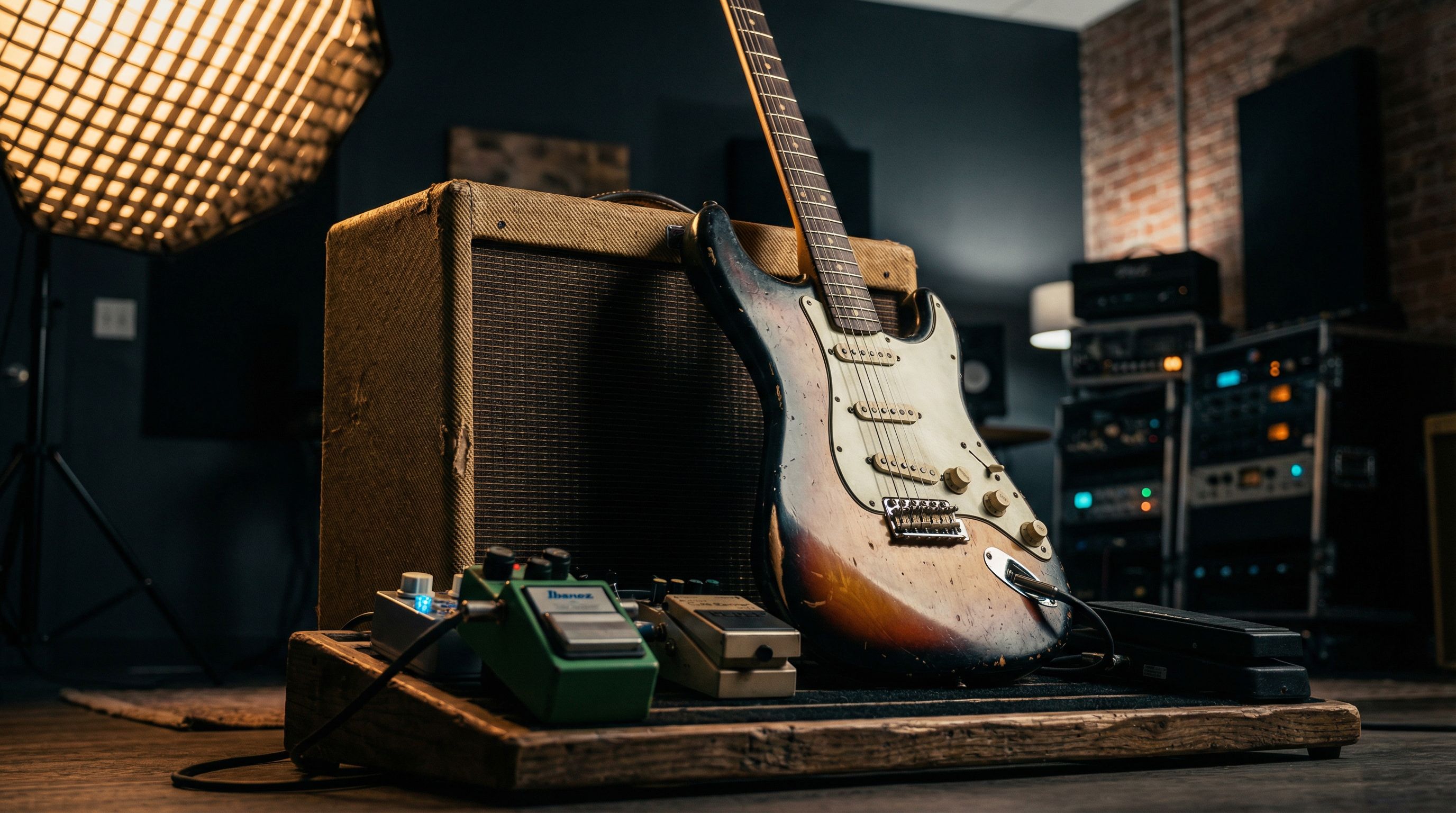
- Fender Stratocaster with the neck pickup: Number One, his primary Strat, had a 1959 body, a 1962 neck, and a left-handed tremolo bar setup on a right-handed guitar. The neck pickup was home base: warm, round, and thick.
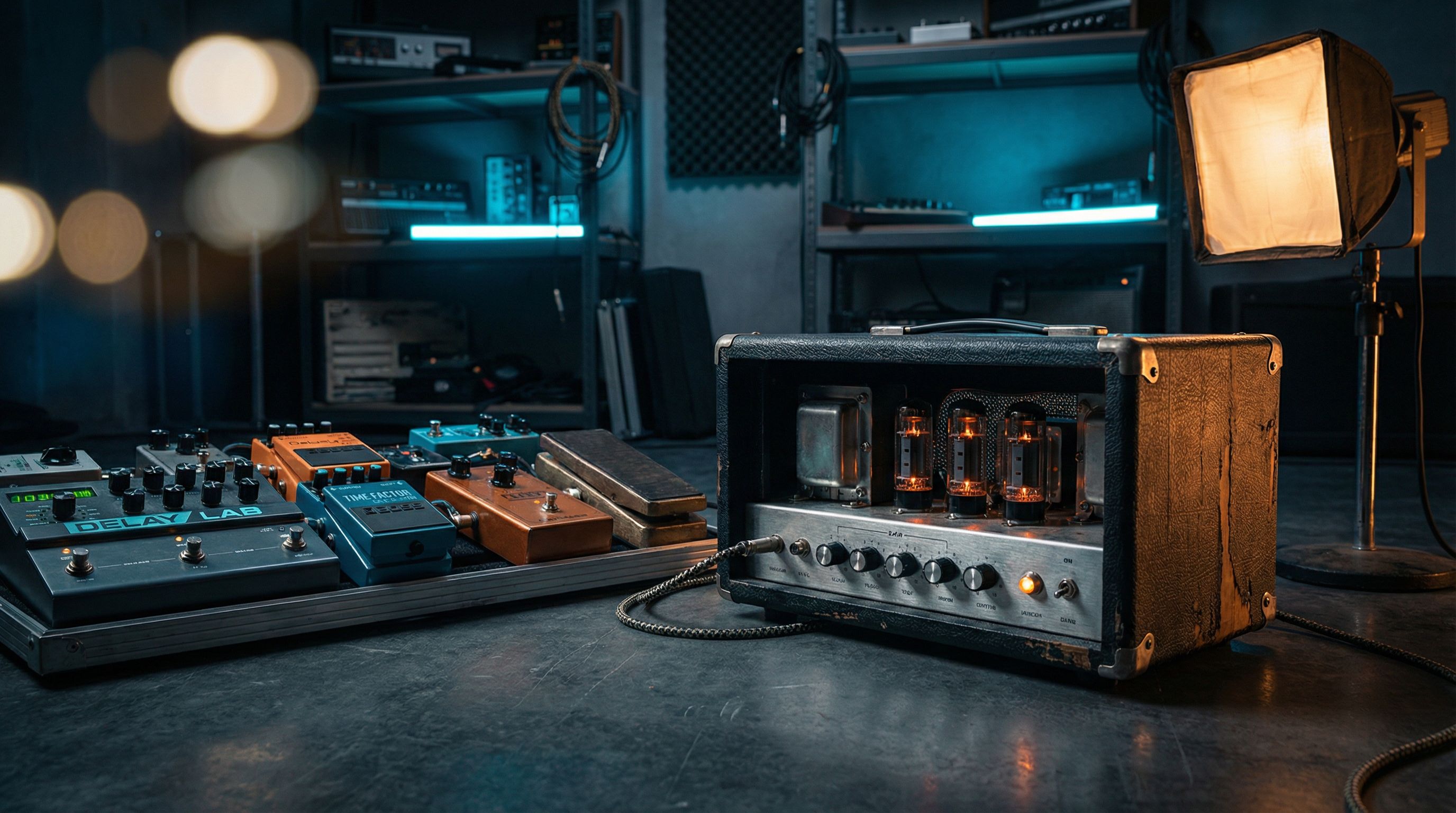
- Tube Screamer into a cranked Fender amp: An Ibanez TS808 (and later a TS10) set as a mid-boost, pushing the front end of a Fender Vibroverb, Super Reverb, or Dumble Steel String Singer that was already breaking up on its own. The pedal was not the dirt source. The amp was. (Our Tube Screamer settings guide covers this clean-boost approach and four other configurations.)
- Volume and air: SRV played LOUD. His amps were cranked, and the interaction between the guitar, the amp, and the air moving through the speakers was a massive part of the tone. That sag. That compression. That bloom. It all comes from volume.
The last point is the hardest to replicate on a modeler. But the right settings get surprisingly close.
The Amp Model: US Double Nrm
The foundation of any SRV Helix patch is the US Double Nrm amp model. This is Helix's version of a Fender Twin Reverb on the normal channel: a loud, clean, American amplifier with tons of headroom.
SRV actually used several amps (Vibroverbs, Super Reverbs, the Dumble). But the Twin Reverb is the closest match in the Helix library to the clean-but-on-the-edge character of his tone. The normal channel (not the vibrato channel) gives you a flatter, more direct response that takes pedals beautifully.
Amp Settings
- Drive: about 11 o'clock. You want the amp just starting to break up on its own. Not clean. Not crunchy. Right at that edge where hard picking causes the amp to bark.
- Bass: noon
- Mid: about 1 o'clock. SRV's tone is mid-forward. Do not scoop the mids.
- Treble: about 1 o'clock. Enough brightness to cut, but not harsh. The kind of top end that slices through a band without making you wince.
- Presence: noon
- Master: around 3 o'clock to full. Crank this. On a modeler, the master volume affects the power amp modeling: sag, compression, and harmonic richness. Higher master equals more of that cranked-amp feel where the notes bloom outward instead of just getting louder.
- Sag: about 1 o'clock (if available in the advanced settings). Simulates the power supply compression of a tube amp running hard. More sag means more squish and bloom on your notes.
- Hum: around 8 o'clock. A touch of 60-cycle hum adds authenticity. Do not overdo it.
- Ripple: noon. Power supply ripple contributes to that organic, living feel.
The Drive Block: Scream 808
This is where the magic happens. The Scream 808 is Helix's TS808 model, and it is the most important block in the entire patch.
Here is what most people get wrong. The Tube Screamer in an SRV context is not a distortion pedal. It is a mid-boost and a signal conditioner. SRV ran his TS808 with the gain relatively low; the overdrive came from the amp, not the pedal. The Tube Screamer pushed the amp harder, added a midrange hump that gave his Strat more body, and tightened the low end.
Scream 808 Settings
- Gain: around 9 o'clock to 10 o'clock. This is low. Lower than you think. The TS is not your dirt source. The amp is. The gain adds a touch of hair, but the real job is done by the level knob.
- Tone: about 11 o'clock to noon. Right around noon or slightly below. Push the tone past 1 o'clock and it starts to get shrill with a Strat neck pickup. Too low and you lose the cut.
- Level: around 2 o'clock. This is the key setting. The level controls how hard the Scream 808 pushes the amp model. Higher level means more amp breakup, more sustain, more of that Texas sound.
Place the Scream 808 before the amp block. Non-negotiable. It is a front-of-amp effect.
The Cab: Getting the Speaker Right
SRV's tone came through various Fender combo speakers (Jensen, JBL, and Electro-Voice) in different combos. The Helix cab that gets closest:
1x12 US Double: The matching cab for the Twin Reverb model. It works, but you can improve on it.
For a more authentic tone, try these approaches:
Option 1: Stock Helix Cab
Use the 1x12 US Double cab with these mic settings:
- Mic: 57 Dynamic (SM57)
- Distance: 2-3 inches
- Position: Slightly off-center (around 10 o'clock on the Helix's positioning parameter)
The SM57 slightly off-axis tames the high-end harshness while keeping the midrange punch.
Option 2: Third-Party IR
A third-party impulse response of a Fender combo speaker makes a noticeable difference. Look for IRs captured from:
- Fender Vibroverb with a 15-inch JBL speaker
- Fender Super Reverb with 10-inch Jensen speakers
- Any Fender 1x12 or 2x12 with vintage speakers
Load the IR using a IR block instead of the stock cab block. The IR replaces both the speaker and microphone modeling, often with more detail and realism.
Additional Blocks
Reverb
SRV used spring reverb from his Fender amps. Add a Simple Spring or '63 Spring reverb block after the amp:
- Mix: about 9 o'clock. SRV's reverb was subtle. You should feel it more than hear it. Adds depth and space without washing things out.
- Decay: around 10 o'clock
- Tone: noon
Optional: Wah
SRV used a Vox wah for certain songs. If you want to add one, use the UK Wah 846 block before the Scream 808, assigned to an expression pedal. But for his core tone, skip the wah.
Optional: Chorus/Vibrato
For "Cold Shot" and some clean tones, SRV used a vibrato effect. The Vibe Rotary or a subtle chorus block after the amp can approximate this. Keep the mix low and the rate slow.
The Signal Chain
Here is the complete block order:
- Input
- Scream 808 (drive)
- US Double Nrm (amp)
- 1x12 US Double or IR block (cab)
- '63 Spring Reverb (reverb)
- Output
Five blocks. SRV's tone was not complicated from a gear perspective. The complication was in the hands.
The Secret Sauce: Making It Feel Right
Here is where most SRV Helix patches fail. They nail the frequency response (the EQ sounds about right) but they miss the feel. SRV's tone had a bounce, a sag, a push-pull dynamic that made single notes bloom and chords bark. The kind of overdrive where the note starts hard, softens for a moment, then swells back as the power amp catches up, like the speaker is breathing with you.
Tip 1: Crank the Master Volume
The biggest mistake is running the amp model's master volume too low. On a real amp, cranking the master pushes the power tubes into saturation, adding compression, sag, and harmonic richness. The Helix models this, but only if you actually turn the master up. Set it past 3 o'clock.
Tip 2: Use Your Guitar's Volume Knob
SRV cleaned up by rolling back his volume knob. Not by switching channels or turning off pedals. Practice rolling your guitar's volume from 10 (full dirty) to 7 for slight crunch, to 5 for chimey clean. The Scream 808 into the amp model responds to this just like real gear. The volume knob is the most underused control on the guitar.
Tip 3: Pick Hard, Then Harder
SRV attacked the strings. His tone was built on a strong, confident pick attack with heavy strings. If you are picking gently, even a perfect preset will sound weak and lifeless. Dig in. Use the thick part of the pick. Hit the strings like you mean it.
Tip 4: Neck Pickup, Tone Rolled Slightly Back
SRV lived on the neck pickup with the tone knob rolled back slightly, around 2 o'clock on the guitar's tone pot. This takes the ice-pick edge off the Stratocaster's brightness and warms the tone up. On a Helix, you can approximate this with the amp's treble and presence settings, but actually rolling your guitar's tone knob back is more authentic.
Tip 5: Don't Overdo the Gain
The temptation is to add more gain to get more sustain. Resist it. SRV's tone had note definition and clarity even at its most aggressive. You could hear every note in a double-stop. Every string in a chord. If your notes are blurring together, you have too much gain. Back the Scream 808's gain down and compensate with a harder pick attack.
I expected more gain would get closer to the "Texas Flood" sound. What I found was the opposite: backing the Scream 808 gain down to about 9 o'clock and pushing the level past 2 o'clock produced that thick, open quality where the notes have weight but never lose their edges. The sustain comes from the amp working hard, not the pedal clipping.
Quick Reference Settings
| Block | Parameter | Value |
|---|---|---|
| Scream 808 | Gain | about 9-10 o'clock |
| Scream 808 | Tone | about 11 o'clock to noon |
| Scream 808 | Level | around 2 o'clock |
| US Double Nrm | Drive | about 11 o'clock |
| US Double Nrm | Bass | noon |
| US Double Nrm | Mid | about 1 o'clock |
| US Double Nrm | Treble | about 1 o'clock |
| US Double Nrm | Master | around 3 o'clock+ |
| '63 Spring | Mix | about 9 o'clock |
| '63 Spring | Decay | around 10 o'clock |
Final Thoughts
Getting SRV's tone on the Helix is less about finding the perfect settings and more about understanding why his tone worked. A Stratocaster neck pickup through a pushed Fender amp with a Tube Screamer providing the midrange shove. Simple gear. Played with ferocious dynamics and feel.
Dial in the settings above as a starting point, try our SRV Pride and Joy rhythm recipe for a ready-made version, or browse our tone recipes to find other blues tones ready to go. Then focus on your playing. Pick harder. Use your volume knob. Play with conviction. The preset gets you in the ballpark. Your hands get you home.