No. 0711990·heavy-metal·5 blocks
Painkiller
Judas Priest's fastest, most violent statement. On the 1990 title track, Glenn Tipton and K.K. Downing drove hot-humbucker Hamer solidbodies into cranked JCM800-era Marshalls, recorded by Chris Tsangarides at Miraval Studios in France. The rhythm is wall-of-Marshall high gain at roughly 200 BPM; Tipton's solo adds wah and screaming whammy dives. Standard tuning — the speed lives in the picking hand and a tight noise gate.
 Painkiller
Signal path · input → output · 9 blocksLive values · Line 6 Helix

Guitar
Hamer solidbody (Tipton/Downing, Painkiller era)
Pickups
HH
Tuning
bridge
Strings
standard
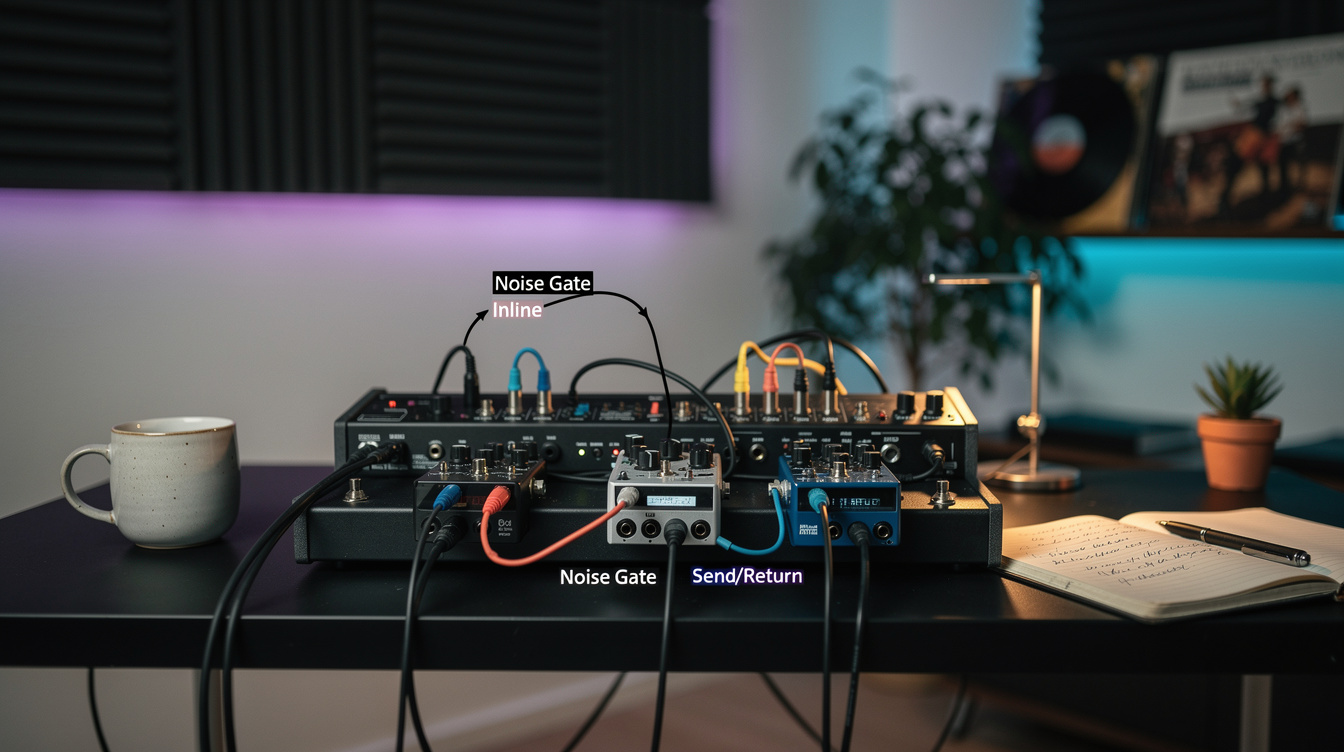
Noise Gate
Deluxe Comp
Chrome
Scream 808
Brit 2204
4x12 1960 V30
Plate
Tilt
Noise Gate
← Rack noise gate (FRFR essential)
Threshold
-52dB
Decay
0.2s
Level
0
Deluxe Comp
← Studio compression
Threshold
-32dB
Ratio
2:1
Knee
6dB
Attack
50s
Release
250s
Mix
35
Level
0dB
Chrome
← Dunlop Cry Baby
Mix
100
Level
0
Scream 808
← TS-style boost (FRFR tightener — not on the record)
Gain
2
Tone
6
Level
8.5
Brit 2204
← Marshall JCM800-era head
Drive
7.8
Bass
5
Mid
6
Treble
7.2
Presence
6.8
ChVol
6.2
Master
10
Bias
5
BiasX
5
Sag
4.5
Hum
5
Ripple
5
4x12 1960 V30
← Marshall 4x12 (Celestion-loaded)
LowCut90Hz
HighCut10500Hz
Level
0dB
Pan
0.5
Delay
0
Plate
← Studio plate (subtle)
LowCut200Hz
HighCut7000Hz
Mix
10
Decay
0.4s
Predelay
20ms
Level
0
Tilt
← Tilt EQ (global brightness)
Tilt
0.5
CenterFreq
1000Hz
Level
0
Engineer's note
File 071
Judas Priest's fastest, most violent statement. On the 1990 title track, Glenn Tipton and K.K. Downing drove hot-humbucker Hamer solidbodies into cranked JCM800-era Marshalls, recorded by Chris Tsangarides at Miraval Studios in France. The rhythm is wall-of-Marshall high gain at roughly 200 BPM; Tipton's solo adds wah and screaming whammy dives. Standard tuning — the speed lives in the picking hand and a tight noise gate.
— Glenn Tipton
Sources · Verified by