Start Here: The one-sentence verdict for each use case:
- SD-1 into a clean amp: Better if your rig is mid-scooped and you need that Tube Screamer mid-hump to cut
- BD-2 into a clean amp: Better for everything else; more touch-sensitive, wider gain range, works across more guitar types
- Price: Both are $50 to $60 new. Used SD-1 runs $25 to $35. Used BD-2 runs $40 to $55. The BD-2 costs more and is worth it.
Quick Reference: Head-to-Head
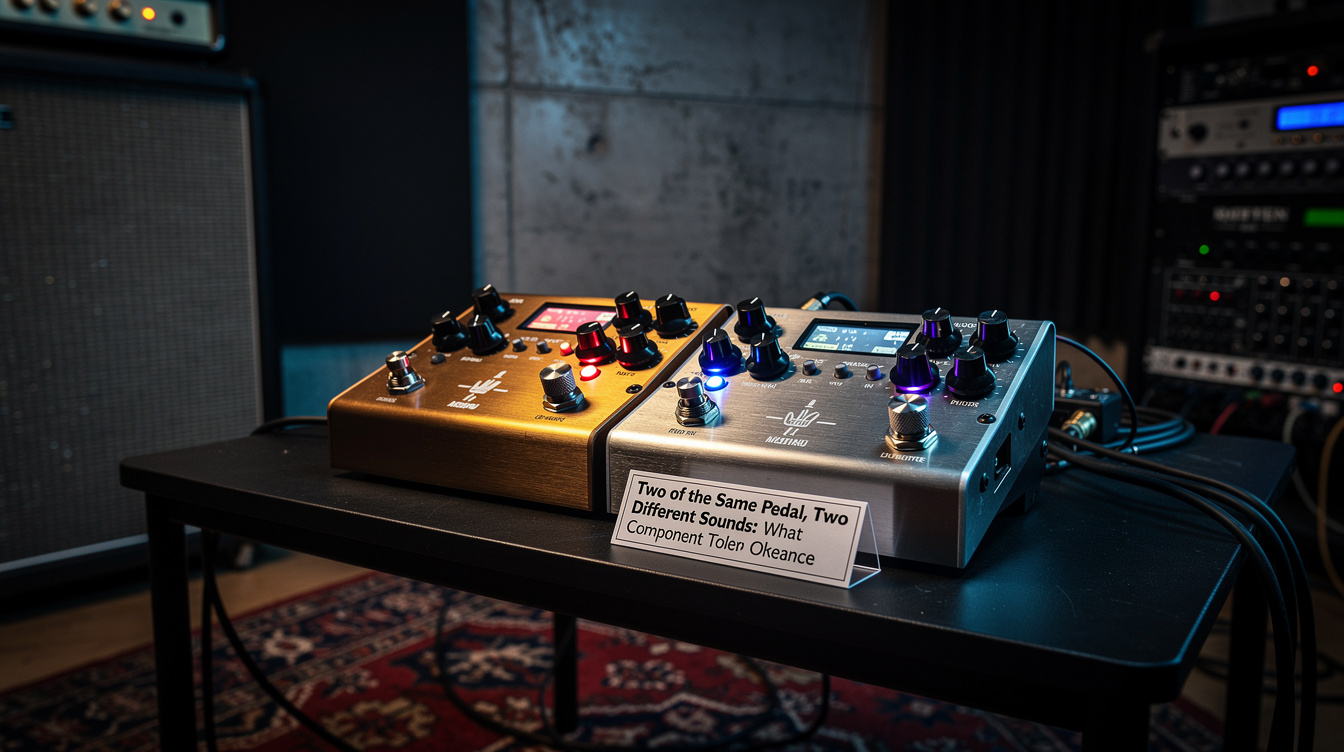
| Parameter | Boss SD-1 Super Overdrive | Boss BD-2 Blues Driver |
|---|---|---|
| Circuit type | FET-based, asymmetrical soft clipping | Op-amp clipping, different response curve |
| TS relationship | Very close to TS808/TS9 circuit | Not TS-derived; different design |
| Mid character | Pronounced mid hump (~720Hz) | Flatter, more presence in the upper mids |
| Touch sensitivity | Moderate; dynamic but mid-hump colors pick attack | High; very responsive to pick pressure |
| Clean-up when rolling volume | Good; behaves like a TS | Good; different character than TS |
| Gain range | Low to medium | Low to medium-high |
| Best use case | Mid-forward push, TS-style OD | Touch-sensitive clean amp boost, wider genre flexibility |
| New price | $50 | $60 |
| Used price | $25 to $35 | $40 to $55 |
The Circuit Difference Is Real
Boss publishes a breakdown of what's different between the DS-1, SD-1, and BD-2 that's worth reading if you care about this stuff.
The SD-1 is essentially a Tube Screamer derivative: FET-based gain stage, asymmetrical soft clipping, and the midrange hump that defines the TS character. The differences from a TS808 are minor enough that they share the same basic behavior: warm low-gain tones at lower Drive settings, the classic "cut through the mix by boosting the mids" behavior at higher Drive settings. The SD-1's tone control cuts differently than the TS808's, and the output impedance is different, but if you've played a TS9 you know what an SD-1 sounds like.
The BD-2 is not a TS derivative. It uses an op-amp clipping design with a different frequency response and a different dynamic character. The result is an overdrive that responds differently to pick pressure, more sensitive to the actual force of the pick stroke, and has a flatter frequency character without the TS's prominent mid peak.
This is not an academic distinction. It's the difference between a pedal that colors your sound toward a specific character (SD-1) and a pedal that amplifies and saturates whatever character you already have (BD-2).
Testing Both Into a Clean Amp
I tested both through a clean Fender-style amp channel (BV Blues Junior, reverb off, no natural breakup at stage volume) with three guitars: Strat bridge pickup, Telecaster neck pickup, and a Gibson SG bridge humbucker. Same basic approach: start with Drive low, walk it up, listen to what changes.
SD-1 Through Clean Amp
The SD-1 into a clean amp immediately imposes its character. The mid hump is audible from Drive at 7 o'clock; even light settings add a warmth and body to the Strat bridge pickup that isn't there dry. At Drive around 9 o'clock, it sounds like a Tube Screamer at 9 o'clock, because that's basically what it is.
The SD-1 is doing exactly what it does on every amp; it's boosting the midrange and adding soft-clipping saturation. Whether that works for you depends on whether your amp and guitar combination needs the mid push. Through the Strat bridge (bright, scooped naturally), it helps: the SD-1 fills in the midrange and makes it sit better. Through the Telecaster neck (dark, thick), the SD-1 made it almost muddy at the same settings, since there's already enough mid there.
SD-1 sweet spot settings:
| Control | Position | Notes |
|---|---|---|
| Drive | 8 to 10 o'clock | Light OD; keep the TS character subtle |
| Tone | Noon to 1 o'clock | Keep it bright to compensate for the mid hump |
| Level | About 2 o'clock | Slightly above unity; let the mid push do the work |
BD-2 Through Clean Amp
The BD-2 at minimum Drive into a clean amp doesn't sound like an overdrive yet. It sounds like a very clean guitar with a slightly different texture. The circuit is adding a small amount of harmonic content and a hint of saturation without the obvious coloration of the SD-1. I ran through the same three guitars, same settings, and the BD-2 let each one stay more itself.
The Strat bridge pickup through the BD-2 at Drive around 9 o'clock sounds like a Strat bridge pickup with edge, still bright, still scooped, but with saturation that respects the natural character rather than mid-correcting it. The Telecaster neck was better through the BD-2 than the SD-1 because the flat-ish EQ response didn't pile mud on a guitar that was already warm.
The touch sensitivity is real. Backing the pick pressure off on a BD-2 at Drive noon is noticeably cleaner than the same pick pressure on an SD-1 at Drive noon. The BD-2 wants to follow your right hand. For clean-amp playing where you're working the pick to control the gain, the BD-2 cooperates.
BD-2 sweet spot settings:
| Control | Position | Notes |
|---|---|---|
| Drive | 9 to 11 o'clock | Light to medium; the touch sensitivity works here |
| Tone | 11 o'clock to noon | Slightly dark; the BD-2 can get bright at higher tones |
| Level | About 2 o'clock | Match or slightly boost unity |
When the SD-1 Wins
The SD-1 is not a worse pedal; it's a more specific pedal. It wins when you want TS character and the mid push is useful:
Stacked before a high-gain amp. The SD-1's mid boost and tight low end is exactly what the "Tube Screamer before a high-gain amp" technique requires. The tube screamer before high gain amp guide covers this in detail, and the SD-1 does the same job for $25 used.
Into a naturally mid-scooped amp or signal chain. Mesa Rectifier owners and V-type EQ settings benefit from the mid correction. If your rig sounds scooped and you want it to cut, the SD-1 is the correct fix.
Classic Tube Screamer tones at lower cost. The SD-1 was $6 at Daiso Japan for years and is still the cheapest TS-style circuit available in a sturdy metal box. If you know you like TS character, it's hard to argue with $25 used.
When the BD-2 Wins
The BD-2 wins in more situations than the SD-1 for clean-amp use specifically:
Touch-sensitive clean boost. The BD-2 at light Drive behaves like the gain follows your playing rather than applying a constant color. For players who work the pick to control saturation, the BD-2 is more cooperative.
Multiple guitar types in one session. The BD-2's flatter EQ means it doesn't over-color brighter guitars or pile mud on darker ones. It works across a wider range of guitars at the same settings.
Blues and blues-rock. The "Blues Driver" name is earned. The touch sensitivity, the way it cleans up with volume roll, and the mid-forward but not TS-style response suits blues playing specifically. John Mayer's clean/light-drive stage sound has included the BD-2 at various points. That's not an accident.
When you want the option to push harder. The BD-2's gain range extends a bit further than the SD-1's before things get fizzy. At Drive 1 o'clock, the BD-2 is still musical and controlled where the SD-1 is starting to get compressed.
The "Use It as a Boost" Question
Both pedals work as clean boosts (Drive minimum, Level high) with meaningfully different results.
The SD-1 as a boost adds the mid hump even at minimum Drive; it's a mid-boosted boost. This is actually useful as a mid-presence push before an amp, even with no saturation added.
The BD-2 as a boost is cleaner (less obvious coloration) and adds a slight harmonic shimmer that the SD-1 doesn't. For a clean boost that doesn't mid-color, the BD-2 is better.
Neither is as transparent as a dedicated clean boost (MXR Micro Amp, EHX LPB-1), but both are usable and both cost less than most dedicated boost pedals.
The Mod Question
Both pedals have established modification cultures, and it's worth noting briefly:
SD-1: The stock SD-1 has a somewhat compressed high end at higher Drive settings. Common mods (asymmetrical clipping diode swap, input cap change) open up the high frequency response. A modded SD-1 by a competent builder sounds noticeably better at medium-high Drive than the stock version. This is part of why the SD-1 remains popular in Japan, where modifications are widely available and the stock pedal is cheap enough that modding it is economically reasonable.
BD-2: The BD-2 Waza Craft (BD-2W) addresses the main stock BD-2 complaint through the Custom mode, which adds more low-end body and sustain. The BD-2 vs BD-2W comparison covers the difference in detail. Stock BD-2 is already good; the Waza version is better if you're running it as a primary drive pedal.
FAQ
Are these worth buying new, or should I always buy used? Both are common enough used that buying new is rarely necessary. SD-1 used runs $25 to $35 on Reverb and Facebook Marketplace. BD-2 used runs $40 to $55. The difference is small enough that condition matters more than the $10 to $15 savings.
Which one has more output level available? The BD-2 has more Level range; it can push an amp harder at unity Drive settings. Useful if you need a significant volume boost for solos alongside the OD function.
Can either pedal work before high-gain metal amp settings? The SD-1 yes, same as the TS808 technique. The BD-2 less so; its flatter mid response doesn't tighten the low end the same way the TS-style mid hump does. For the "OD into high-gain amp" technique, stick with the SD-1 or a proper TS.
What about the SD-1 vs. TS9? Which is more worth buying? The TS9 ($60 to $80 new) is a better built pedal with a more established modification ecosystem and slightly smoother high-end response. The SD-1 at $25 used does the same job for less money. If you're buying primarily to use before a high-gain amp and you find a used SD-1 for $25, that's the move.
Can I use either before a modeler instead of a real amp? Yes. Both work before an HX Stomp, Helix, or Quad Cortex in the same way they work before a real amp. Run them before the input and treat the modeler's amp block as you would the real amp. The SD-1 into a high-gain amp model produces the same tightening effect as into a real amp.