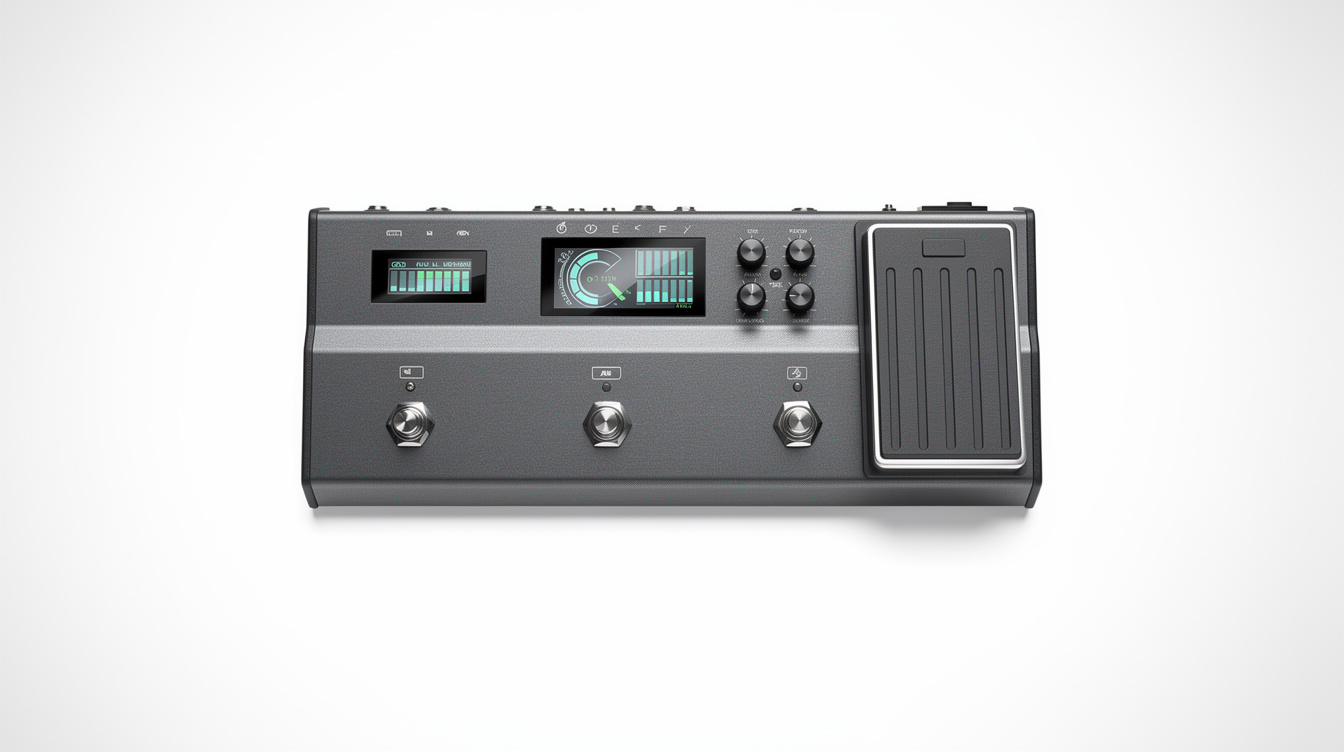
Quick read: The NAMM 2026 coverage led with the Quad Cortex mini, but for someone who already owns a Quad Cortex, the news that matters is CorOS 4.0 — a free firmware update that brings the new utilities to the box you already play. The standout is Phase Doctor, a phase-alignment tool (Neural DSP says it's inspired by the Little Labs IBP) built for the dual-amp and parallel rigs that lose low end on merge. The mini is a smaller-format unit, not a more powerful one: a fly-rig question, not an upgrade. Install the firmware, verify your presets, and judge the mini on footprint alone.
Most of the announcement traffic pointed at the smaller box. The buyer-intent question underneath it — I already own a Quad Cortex; does any of this require me to do anything? — got almost no coverage, because vendor PR and NAMM-floor videos are built to sell the new SKU, not to advise the existing owner. So here's that post.
The short version: the thing you actually get is software, it's free, and whether it changes your rig depends entirely on how you route signal.
CorOS 4.0 vs the mini: Two Different Decisions
Separate the two stories before you spend anything. One is a free update to your current hardware. The other is a new product you'd have to buy. Conflating them is how people end up selling a working unit over a feature that shipped to their existing one for nothing.
| CorOS 4.0 | Quad Cortex mini | |
|---|---|---|
| What it is | Free firmware update | New smaller-format hardware |
| Cost to current owner | $0 | Full purchase price |
| Headline feature | Phase Doctor phase-alignment utility | Reduced footprint |
| Who it's for | Every existing QC owner | Players who need a smaller board |
| Reason to act | Install it; it's a strict addition | Only if size is a real constraint |
| Affects your tone? | Potentially, via new tools and defaults | No — same modeling engine, smaller box |
The mini is a portability play. The firmware is the upgrade. Keep them in separate columns in your head and the decision gets simple.
What CorOS 4.0 Adds for the Unit You Already Own
A major firmware version is a strict addition for an existing owner — you get the new tools without buying anything. The one with real consequences for tone is Phase Doctor.
Phase Doctor: the utility that earns the update
Phase Doctor is a phase-alignment tool. Neural DSP states it's inspired by the Little Labs IBP Phase Alignment Tool, and its job is to correct misalignment between two signals — the exact failure mode you hit when you run two amp paths in parallel, or blend a real amp with a capture, and the merged result sounds thin instead of huge.
The mechanism is worth understanding, because the tool only helps if you know what it's fixing. Two signals that arrive even slightly out of time with each other comb-filter on merge. A time offset as small as 0.3 ms puts the first cancellation notch around 1.7 kHz, and the low end goes hollow because the bass content is partially summing out of phase. You hear it as "where did my low end go" the instant you merge the paths.
Before CorOS 4.0, the fix on a Quad Cortex was manual: a mono-sum test to expose the cancellation, then a polarity flip or a hand-dialed time offset on one path. The dual-amp phase walkthrough covers that manual procedure, and it still works. Phase Doctor automates the alignment step. The CorOS 4.0 Phase Doctor walkthrough goes block-by-block on the new tool itself.
I'll be honest about my own expectation here. Walking into the NAMM coverage, I assumed the news that would matter to my rig would be new amp models or more DSP overhead — more horsepower, more captures per preset. What actually changed how my dual-amp presets behave was a utility, not a tone. Phase Doctor fixed a low-end cancellation in a parallel preset that I had been blaming on the cab block for two months. The thing that moved the needle wasn't a new sound. It was a measurement tool. That's the kind of update that doesn't make a flashy demo and matters more than the ones that do.
Who Phase Doctor does nothing for
This is the part the buyer-intent reader needs. If you run one amp block into one cab block into the output, Phase Doctor has nothing to align. A single path can't comb-filter against itself. The update is still worth installing — firmware updates also carry stability fixes and groundwork for later features — and even a single-path player gets the new reverbs below. But Phase Doctor itself won't change a one-amp rig, so don't expect it to fix a problem you didn't have.
The players who get the most from Phase Doctor:
- Dual-amp and parallel rigs — the primary target. Two paths merging is where phase problems live.
- Real-amp-plus-capture blends — a miked amp and a capture rarely land in perfect time alignment.
- Stereo rigs feeding a mono PA — anything that might collapse to mono downstream needs phase coherence, or it thins out the moment the front-of-house engineer sums it.
Three new reverbs: the free win everyone gets
CorOS 4.0 also adds three reverbs, and unlike Phase Doctor they don't care how you route signal — a single-amp player gets the full benefit. Neural DSP lists them as Nordic Concert Hall (inspired by the Valhalla VintageVerb Concert Hall mode), Studio Plate 70 (inspired by the Lexicon PCM70 rich-plate programs), and Blossom (inspired by the Strymon BigSky Bloom mode). That's a large hall, a studio plate, and a swelling ambient verb — three different jobs, not three flavors of the same thing.
If you've been running an external reverb after your Quad Cortex purely because the onboard options didn't cover the sound you wanted, the Bloom-style Blossom in particular is worth auditioning before you assume you still need the pedal. The update is genuinely additive here: new tools, no cost, no new hardware.
A handful of workflow changes ride along too — a custom device name for managing multiple units in Cortex Control, a hold-timing menu that sets how long a footswitch must be held to fire its action (500 ms to 1 second), and a faster Scene dropdown. None of those are reasons to update on their own, but they're the kind of quiet quality-of-life additions that make the free install easy to recommend.
If none of this touches how you play, install it, verify your presets, and move on.
The mini: a Footprint Decision, Not a Tone Decision
Here's the detail that settles it: Neural DSP confirms the mini runs the same CorOS as the original Quad Cortex, with the same feature set and a slightly different interface. The headline change is a footprint reduced by more than 50 percent, plus a horizontal, touch-sensitive volume fader in place of the original's layout. Same modeling engine, same captures, same sounds — in a box half the size. It is not a more powerful unit. It is a smaller one.
That reframes the question. You don't buy a smaller box for tone, because the tone is identical. You buy it because the size of your current one is an active problem: a fly date with a strict carry-on, a tight pedalboard, a backup rig that has to disappear into a backpack. If none of those describe you, the mini is solving a problem you don't have.
For the existing owner, the realistic use cases are narrow and specific:
- A fly rig that mirrors your main presets in a smaller case.
- A second/backup unit so your main board stays built.
- A grab-and-go for sessions or rehearsals where the full floor unit is overkill.
What it is not is a reason to sell a working Quad Cortex. You'd be trading a unit that does the job for one that does the exact same job — same CorOS, same tone — in less space, and eating the depreciation to do it. If portability isn't the thing you're solving, that math doesn't close.
The Decision, Stated Plainly
| You are… | Do this |
|---|---|
| Any existing QC owner | Install CorOS 4.0. It's free and strictly additive. |
| Running parallel/dual-amp/stereo presets | Install it, then run Phase Doctor on your merged paths |
| Running a single amp-into-cab preset | Install it for stability; expect no tone change |
| Considering the mini for tone | Don't. Same engine, smaller box. |
| Needing a genuine fly rig or backup | The mini is a legitimate option — same CorOS and tone, half the footprint |
| Tempted to sell your QC for a mini | Install the firmware first; the free update likely covers what you felt was missing |
One more thing, and it's the step people skip: after a major firmware version, verify your existing presets before you trust them on a gig. A new CorOS release can move a default or change a block's behavior. Don't assume nothing shifted. A/B a few key presets against a reference recording or a known-good capture. It takes ten minutes and it's the difference between finding a changed default at home and finding it at soundcheck.
This isn't a Quad Cortex-specific discipline, either. A Helix owner staring at a major HX firmware drop, or a Kemper owner mid-OS update, faces the same two questions: what did the free update actually add to the box I own, and is the new hardware solving a problem I have? The answer is usually install the firmware, verify, and buy hardware only for a real constraint — regardless of whose logo is on the unit.
Update the box you own. Measure what changed. Buy the smaller one only if size is the problem you're actually trying to solve.