Start Here: The Four-Snapshot Sunday Layout:
- Clean — picked verses, comping under the vocal
- Pad — volume swells, intros, transitions, under prayer
- Drive — choruses and driving rhythm, edge-of-breakup
- Lead — bridge lifts and melodic lines that sing over the band
Same amp, cab, comp, and volume pedal in all four. Only the drives, delay mix, and reverb size move.
One Preset, Four Moments
Most worship guitarists build Sunday morning the hard way: a preset per song, sometimes two, and a frantic bank-up-bank-down dance between the intro and the first chorus. It works until the tempo pushes and you miss the switch — and now the pad is still washing while the band has already dropped into a driving bridge.
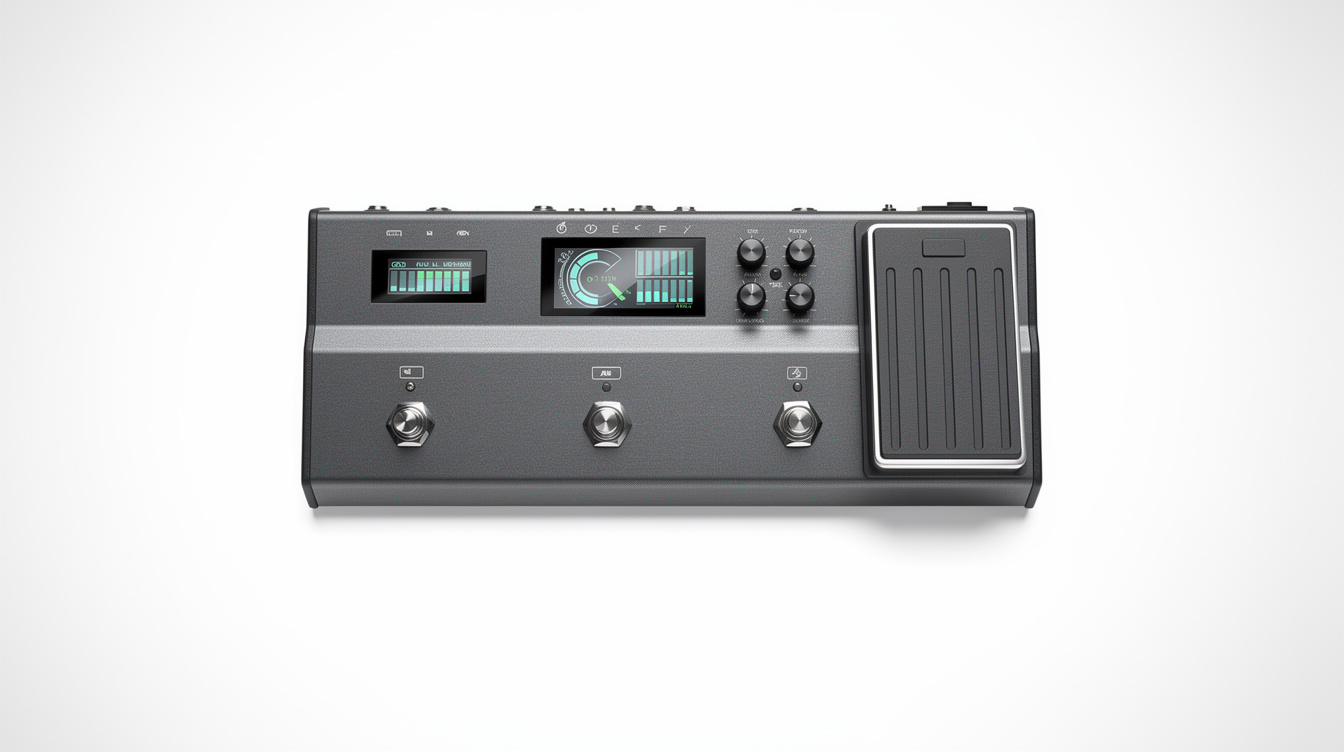
There is a better structure, and it is the thing the Helix does that a pedalboard cannot: build the entire service inside one preset and let snapshots carry the moments. Snapshots recall block states and parameter values instantly, with no audio gap, so a swelled pad becomes a driven chorus on the same beat the drums lift. Four snapshots — mapped to jobs, not song titles — cover almost any modern worship set.
I run exactly this layout at my church, and the honest measure of it is that I stopped looking down. When every song maps to the same four jobs, your feet learn the geography in a week, and you spend the set listening to the room instead of reading your floor.
The System on One Screen
The amp, cab, compressor, and volume pedal never change. Everything else moves in service of the moment.
| Snapshot | The moment it serves | Drives | Delay | Reverb |
|---|---|---|---|---|
| 1 — Clean | Picked verses, comping | Off | Dotted 1/8, low mix | Medium plate |
| 2 — Pad | Swells, intros, under prayer | Off | Dotted 1/8, tucked | Big shimmer, long decay |
| 3 — Drive | Choruses, driving rhythm | Low-gain boost on | Dotted 1/8, medium mix | Medium plate |
| 4 — Lead | Bridge lifts, melodic lines | Both drives on | Present, medium mix | Medium plate |
The signal chain, in order: Volume Pedal → Deluxe Comp → Minotaur (boost) → Scream 808 (drive) → Essex A30 TB → cab → Transistor Tape (dotted 1/8) → Plate or Glitz reverb. The Vox-style Essex A30 TB is the worship default for a reason — run it around Drive 4.0, Bass 3.5, Mid 5.0, Treble 6.0 on the 0–10 scale, edge-of-breakup, and let the pedals and snapshots do the moving. The Helix amp model cheat sheet covers the amp choices if you want a different base; Helix cab models decoded explains why the cab pick matters as much as the amp.
Notice what is constant. That stability is not laziness — it is the point. When only two or three things move between snapshots, the changes feel like the song breathing, not like the guitarist swapping rigs.
Snapshot 1 — Clean: The Workhorse
Comp on, drives off, delay low, a medium plate reverb. This is picked verses, arpeggiated patterns, comping under a vocal — the tone you are actually on for more minutes of the morning than any other.
Two disciplines keep it working. First, the delay stays rhythmic but quiet: a dotted eighth around 20% mix adds motion to picked patterns without announcing itself. Second, resist the big reverb here. A verse guitar washed in a ten-second tail fights the vocal; a medium plate keeps you in the same room as the singer.
Snapshot 2 — Pad: The One You Will Live In
Same clean amp, but the space transforms: reverb opens up to a large shimmer with a long decay, and the volume pedal becomes the instrument. Heel back, pluck, swell in with no attack — done well, nobody notices a guitar entered; the room just feels fuller. This is intros, transitions between songs, and holding the bed under prayer when the keys player is suddenly leading a chorus a cappella.
The delay stays tucked at a low mix here — in the pad it is a thickener, not a rhythm. You want the repeats blurring into the reverb tail, not tapping out eighths over a quiet moment. If the swell technique is new, volume swells 101 covers the timing.
Snapshot 3 — Drive: Edge of Breakup
When the song starts moving — second verse, pre-chorus, anywhere the drummer picks up the ride — kick on the low-gain Minotaur boost, park the volume pedal toe-down, and pull the reverb back to the medium plate. The delay can come up to a medium mix now; with a rhythm section holding the pulse, the repeats add motion instead of clutter.
The temptation is to make this snapshot too dirty. Resist it. Worship rhythm tone is edge-of-breakup, not crunch — enough hair that strummed eighths have definition, and no more. The dynamics rule still applies: this snapshot should clean up noticeably when you roll the guitar volume back, which is what lets one snapshot cover both a pre-chorus build and a full chorus.
Snapshot 4 — Lead: The Bridge Lift
Both drives on — the Minotaur stacked with a Scream 808 — so the amp is genuinely pushed and a single-note line sings over the band without you playing harder. Set this snapshot's output a touch hotter (+1 to +2 dB) so the lift is a musical lift, not just more gain.
Here is the counterintuitive part: the Lead snapshot needs less reverb than the Pad, not more. The instinct says the biggest moment wants the biggest wash, but a long shimmer smears a melodic line into mush the second you play anything moving. The moment reads as huge because the drives and the band are huge — the reverb's only job is to keep the lead from sounding dry, and a medium plate does that. Save the giant reverb for the pad, where there is space for it.
Wiring Details That Make or Break It
- Volume pedal first, assigned to EXP 1 in every snapshot, so your swell shapes how the comp, amp, delay, and reverb bloom — you swell into the wet effects, not after them.
- Delay before reverb, both after the cab, so the repeats feed the wash and the whole thing sums into one bed.
- Trails on for the delay and reverb blocks, so tails carry across snapshot changes instead of cutting.
- Snapshot edits: set to Recall (Global Settings → Preferences → Snapshot Edits) once the four are dialed, so a mid-service tweak does not silently rewrite your Pad snapshot.
- Coming from a physical board? The worship pedalboard signal chain walks through the analog rig each block stands in for.
Two Songs to Practice the System On
The fastest way to internalize four snapshots is a song that uses most of them. Two Sunday-morning standards, both built on this same AC30-plus-ambience foundation:
- Goodness of God lives in the Pad and Lead snapshots — swelled verses, stacked drives at the bridge peak. The Goodness of God Helix walkthrough maps its sections to snapshots block by block.
- Way Maker is a volume-swell clinic — the Pad snapshot with a dotted-eighth delay is the verse part. The Way Maker Helix walkthrough has the exact settings, including the 661 ms delay math.
Load one, play through it switching moments with your foot, and by the second run you will stop thinking about which switch is which. That is the whole goal — the rig disappears, and the song gets to be the thing in the room.
Want the tones to load into this layout? Explore the worship guitar guides for song-by-song Helix walkthroughs and presets.