No. 0081987·rock·5 blocks
Where the Streets Have No Name
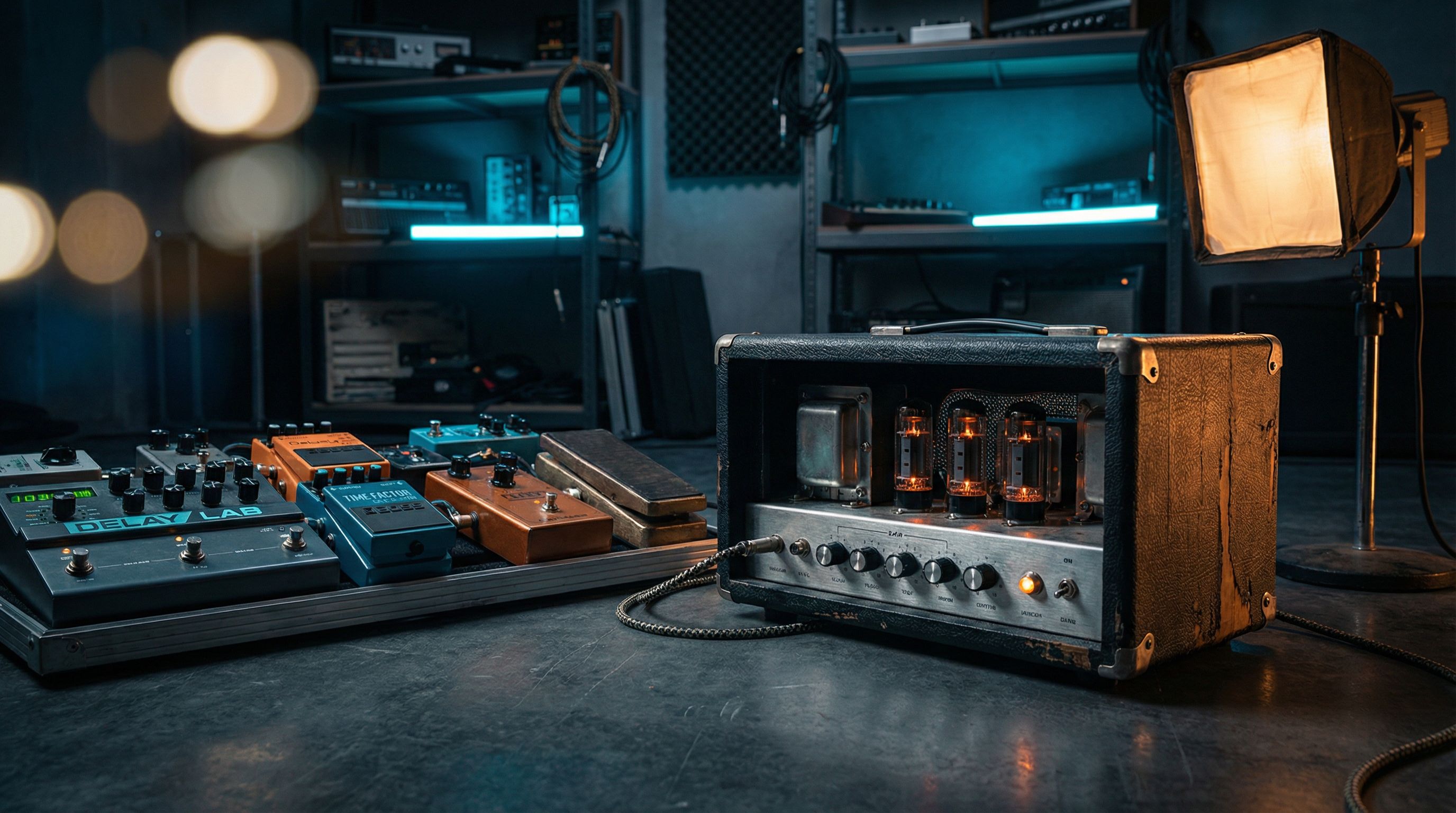
The defining textural guitar tone of the 1980s. The Edge's approach on Where the Streets Have No Name is built on rhythmic delay: a dotted eighth note delay synchronized to the tempo creates a cascading, shimmering pattern where the delayed notes fill in the gaps between picked notes. The result is a wall of chiming sound that seems much more complex than what is actually being played. The Vox AC30 provides a bright, chimey foundation, and the delay does the rest.
 The Joshua Tree
Signal path · input → output · 6 blocksLive values · Pedalboard

Guitar
Fender Stratocaster / Gibson Explorer
Pickups
HH
Tuning
bridge
Strings
standard
Vox AC30 (Top Boost)
Korg SDD-3000 Digital Delay
Memory Man (secondary delay / modulation)
Hall Reverb (studio / TC Electronic)
Vox 2x12 (Celestion Blues)
Vox AC30 (Top Boost)
preamp
Volume
6
Treble
7
Bass
4
Cut
4
Master
6
Korg SDD-3000 Digital Delay
delay · FX loop
Time
357ms
Feedback
40
Mix
40
Memory Man (secondary delay / modulation)
delay · FX loop
Feedback
25
Mix
20
Hall Reverb (studio / TC Electronic)
reverb · FX loop
Decay
2.5s
Mix
25
Pre Delay
40ms
Engineer's note
File 008
The defining textural guitar tone of the 1980s. The Edge's approach on Where the Streets Have No Name is built on rhythmic delay: a dotted eighth note delay synchronized to the tempo creates a cascading, shimmering pattern where the delayed notes fill in the gaps between picked notes. The result is a wall of chiming sound that seems much more complex than what is actually being played. The Vox AC30 provides a bright, chimey foundation, and the delay does the rest.
— The Edge
Sources · Verified by