Quick read: Most ambient guitar rigs sync the delay and forget the reverb, and that's the problem — the delay rides the grid while the reverb bloom lands wherever it wants, smearing across the beat. Put both on one tempo. Set the delay to a dotted-eighth (quarter-note milliseconds times 0.75), set the reverb predelay to an audible subdivision (an eighth or sixteenth, not a tiny 1/32), and time the decay to clear within a bar. The dry note speaks first, the reverb arrives on the grid behind it, and the whole ambient bed breathes in rhythm instead of against it. The chart below gives you the numbers for five tempos; your ears do the final tuning.
There's a specific kind of ambient guitar that sounds enormous and intentional — every repeat and every bloom feels placed, like the space was composed rather than switched on. And there's a far more common kind that sounds enormous and accidental, a smear of effect that buries the part instead of lifting it. The difference is rarely the gear. It's almost always whether the reverb is on the same clock as the delay, or off doing its own thing.
Listen to the way the delay and the reverb move together on "Where the Streets Have No Name" — the repeats and the air around them pulse as one rhythmic organism, not two effects stacked on top of each other. That coherence is the thing we're after, and it comes down to a single grid that both blocks agree to live on.
The Problem: a Synced Delay and a Free-Floating Reverb
Here's what almost everyone does. They tap the delay to tempo — usually a dotted-eighth, because that rhythmic stagger is the sound — and they feel good about it, because the repeats are locked. Then they switch on a reverb, dial it until it sounds big, and leave it there. The reverb's predelay, the gap before the tail blooms, sits at whatever the factory left it. And that gap, untethered to the song, drops the reverb's arrival somewhere in the cracks between beats.
You can hear the result even if you can't name it. The repeats tick along on the grid, crisp and rhythmic, and underneath them the reverb is a wash that doesn't agree with anything — blurring across the downbeat, bleeding the end of one chord into the front of the next. The part sounds busy and indistinct at the same time. More reverb only makes it worse. The fix isn't less reverb. It's putting the reverb's timing on the same grid the delay already lives on.
The Math, Once, So You Never Have to Think About It Again
Everything keys off the quarter note, and the quarter note keys off the tempo:
- Quarter note (ms) = 60000 ÷ BPM
- Dotted-eighth (your delay) = quarter × 0.75
- Eighth note = quarter ÷ 2
- Sixteenth note = quarter ÷ 4
That's it. The delay wants the dotted-eighth. The predelay wants the eighth or the sixteenth. And the decay wants to clear within a bar. Here are five tempos worked out — slow singer-songwriter through driving indie — so you can find your song and dial by feel.
| BPM | Quarter | Dotted-8th (delay) | 1/8 (predelay, breathy) | 1/16 (predelay, tight) | ~1-bar decay |
|---|---|---|---|---|---|
| 70 | 857 ms | 643 ms | 429 ms | 214 ms | ~3.4 s |
| 90 | 667 ms | 500 ms | 333 ms | 167 ms | ~2.7 s |
| 110 | 545 ms | 409 ms | 273 ms | 136 ms | ~2.2 s |
| 130 | 462 ms | 346 ms | 231 ms | 115 ms | ~1.8 s |
| 150 | 400 ms | 300 ms | 200 ms | 100 ms | ~1.6 s |
The dotted-eighth column is your delay time — the Edge-style dotted-eighth stagger that turns single notes into cascading patterns. The two predelay columns are the choice that makes or breaks the breath, and the difference between them is more dramatic than the small numbers suggest.
Predelay Is Where the Breath Lives
Predelay is the silence between your dry note and the moment the reverb blooms behind it. Most players treat it as a technicality. It's the most expressive control on the reverb.
Set it short — a sixteenth, the tight column — and the reverb arrives close behind the note, quick and intimate, the guitar in a small live room with hard plaster walls. The bloom is right on the heels of the pick attack. Set it longer — an eighth, the breathy column — and there's a real gap, a moment where the dry note rings alone before the space opens up around it, like the first beat of reverb in a stone chapel a half-second after the chord. That gap is the breath. On a slow, spacious part, the eighth-note predelay is what lets each chord stand on its own before the wash answers it.
I'll admit I went looking in the wrong direction on this. My instinct was that more precise meant smaller — that a 1/32-note predelay, hugging the transient, would be the tasteful, locked-in choice. What I found was that values that small are inaudible as rhythm. They tighten the reverb, but they don't make it breathe, because there's no perceptible gap for the ear to feel as timing. The breath only showed up when I went bigger, to the eighth and sixteenth — values large enough to hear as a deliberate space. The lesson stuck: predelay on an ambient part isn't a corrective tweak, it's a rhythmic instrument, and it wants to be audible.
And the counterintuitive part, the one I keep having to re-learn: a synced, longer predelay makes the guitar sound more forward, not further away. Because the dry transient gets its own clean moment before the reverb arrives, the note speaks with its full presence first. The reverb then lands behind it, on the grid, as a deliberate event. Un-synced reverb smears the attack and pushes the guitar back into the fog. Synced predelay keeps it up front and lets the space happen around it. The early-reflection side of this — how the first few milliseconds shape distance — is its own rabbit hole, covered in early reflections vs reverb tail.
Decay: Clear Before the Next Chord
The last piece is the tail length, and the rule is simpler than the predelay choice: the reverb should clear roughly within a bar. On a slow song, give it close to a full bar of decay — the numbers in that last column — so the tail blooms, fills the space, and is mostly gone by the time the next chord lands. On a faster song, half a bar, because a bar's worth of tail at 150 BPM is four chords of reverb piled on top of each other, and that's the mud.
This is a feel target, not a stopwatch rule. You're listening for the tail to resolve before the next chord, leaving a hair of overlap for continuity but not so much that two chords ring together. If you can still clearly hear the previous chord's reverb when you strike the next one, shorten the decay. If the part feels dry and abrupt, lengthen it. The bar is your reference; your ear makes the call.
On Pedals and in a Modeler — Same Grid, Either Way
None of this is platform-specific, and you don't need a screen to do it.
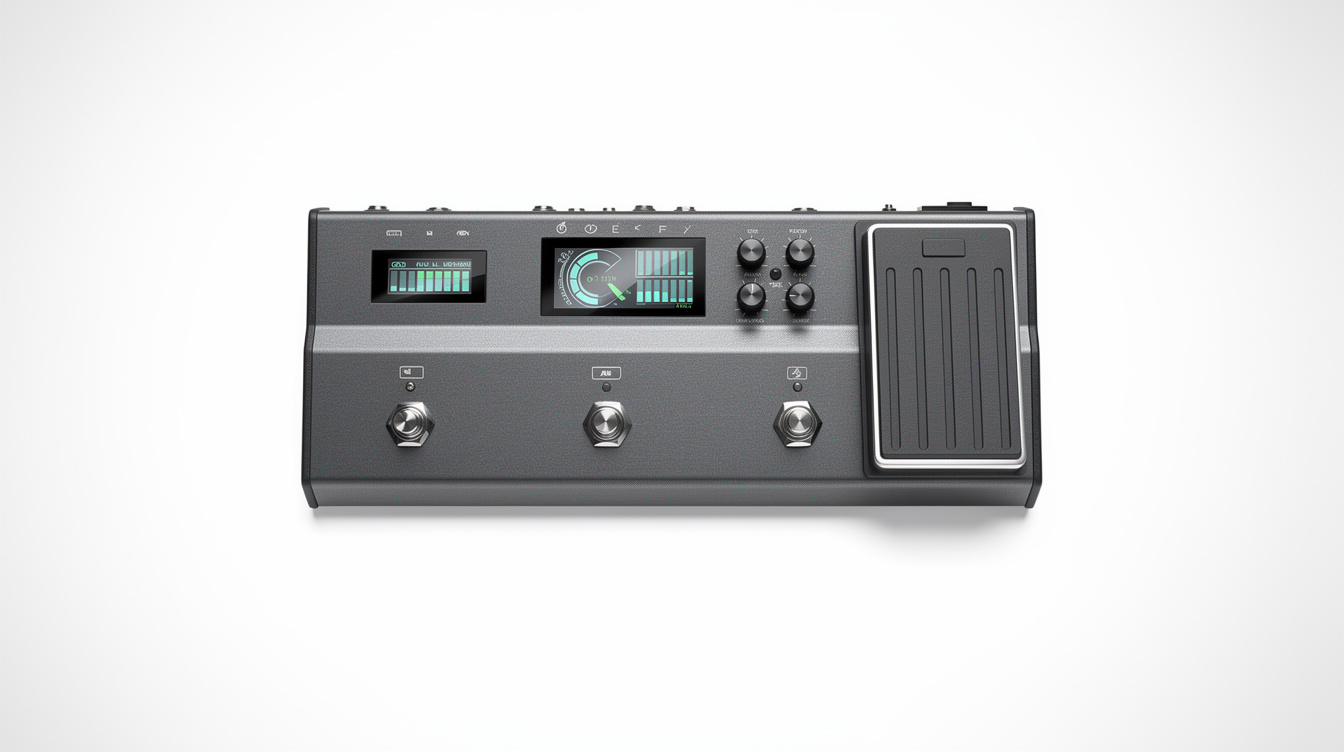
On pedals: tap the tempo into your delay and select the dotted-eighth subdivision — most tap-tempo delays do the multiplication for you once you've tapped the quarter note. Then take the reverb's predelay knob and set it by ear to the eighth or sixteenth value from the chart. You won't hit the millisecond exactly with a knob, and you don't need to — close to the grid is most of the benefit, and your ear closes the rest. A delay with a clean tap and a reverb with an actual predelay control (a Strymon-style box, for instance) is all the rig this takes. The way two ambience pedals share a tempo is the same conversation as pairing reverbs and stacking them — they have to agree on the room.
In a modeler: you get to type the exact values, which is a quiet luxury. Set the delay block to the dotted-eighth (or enter the millisecond value from the chart), enter the predelay in milliseconds directly, and set the decay to your bar target. The grid is identical to the pedal version — you're just hitting it precisely instead of by ear. If you're new to how the reverb block's controls translate, reverb types lays out what each parameter is doing before you start syncing them.
Either way, the principle is the single thing to hold onto: one tempo, shared by both blocks. The delay rides the grid, the reverb blooms on the grid, the decay resets within the bar. Do that and the ambience stops being a thing you switch on and starts being a thing that breathes with the song — present, rhythmic, and placed, instead of a beautiful blur you keep turning down because it's swallowing the part. Dial the chart, then close your eyes and listen for the pulse. When the wash starts moving with the music instead of against it, you've found the grid.