The Katana's Hidden Tube Amp Potential
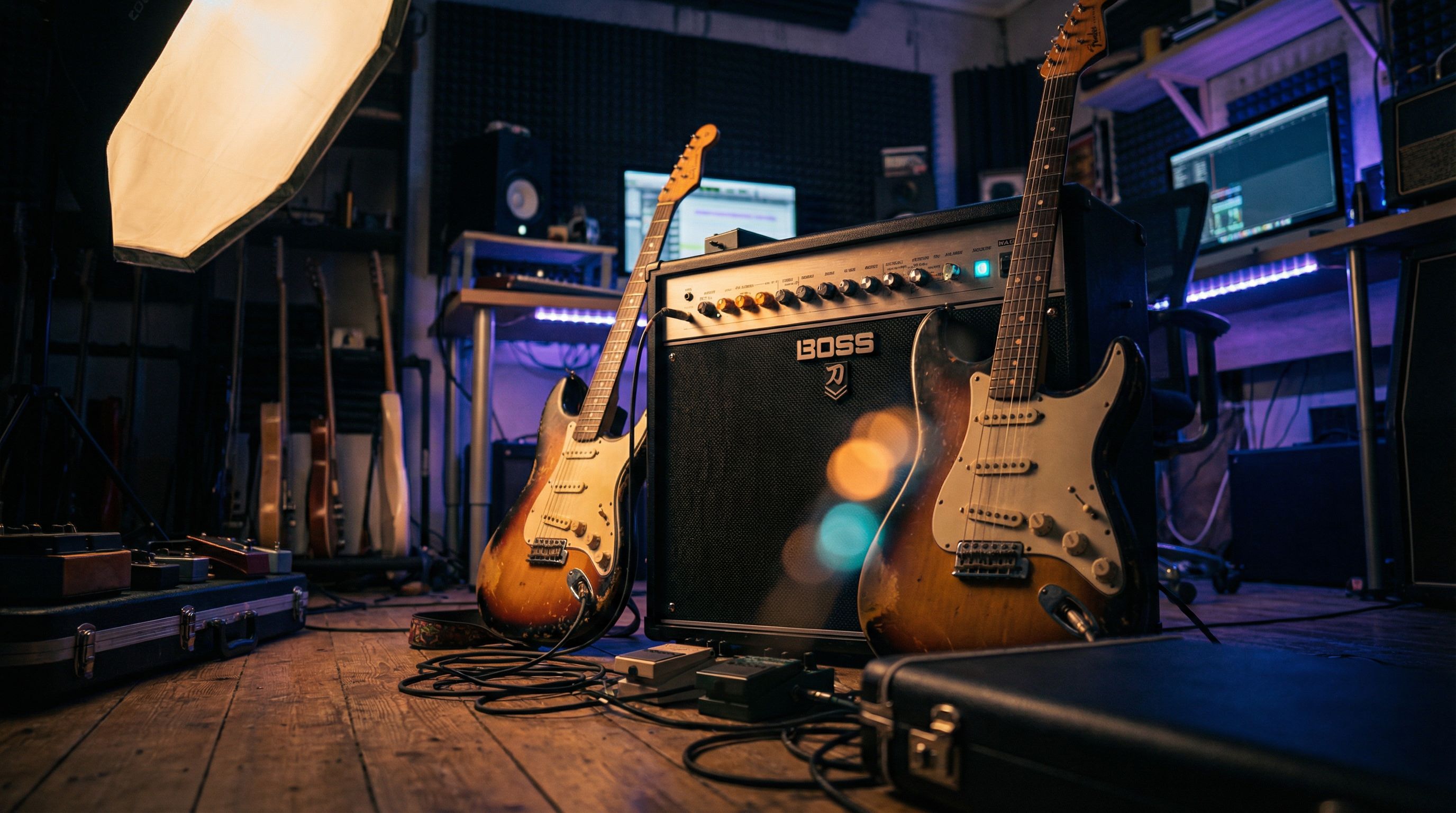
The Boss Katana runs the same tube amp modeling engine as BOSS's higher-end units. Most people don't realize that. They buy it as a practice amp, park it in a bedroom corner, and never open Tone Studio. Meanwhile, the modeling under the hood can nail the feel of classic tube amps (not just the sound, but the way notes respond to your pick attack).
The key is three things: knowing which amp type to start with, shaping the EQ correctly, and (this is the big one) getting into Boss Tone Studio to unlock the deeper voicings. Each of the five settings below targets a real tube amp's sweet spot using specific combinations of amp type, gain structure, and EQ.
A few things before we dive in. These use the standard front-panel controls unless noted otherwise. Knob positions are clock positions (noon = 12 o'clock, fully clockwise = 5 o'clock) since the Katana doesn't have numbered dials. All five work on any Katana model: the 50, 100, and Artist.
1. Fender Twin Reverb Clean: Sparkling and Wide
The Fender Twin Reverb is THE pedal-platform clean tone. Loud, glassy, and that unmistakable shimmer that just sits perfectly in a mix. The Katana's Clean channel gets remarkably close.
Settings:
- Amp Type: Clean
- Gain: 9 o'clock. Just barely above minimum. The Twin is defined by its massive headroom. You want this clean to STAY clean even when you dig in.
- Volume: to taste (this is your overall loudness)
- Bass: 11 o'clock. The Twin's low end is full but controlled. Don't overdo it or the Katana gets boomy in a way the Twin never does.
- Middle: 1 o'clock. A slight mid push keeps the tone from sounding scooped and hollow (and hollow is death on stage)
- Treble: 2 o'clock. Here's where the sparkle lives. The Twin's treble is bright without being harsh, and pushing the Katana's treble knob gives you that chime
- Presence (via Tone Studio): 1 o'clock
Tone Studio additions: Add the Studio-quality reverb set to "Spring" type with a medium decay. The Twin's onboard reverb is a huge part of its identity; skip this and you're leaving half the tone on the table.
Play this with: a Stratocaster on the neck or middle position. Clean arpeggios, fingerpicking, country chicken-picking. Think John Mayer's clean tones or Mark Knopfler's fluid leads.
2. Marshall Plexi Crunch: Classic British Rock
The Marshall Plexi (1959 Super Lead) cranked to breakup IS classic rock. AC/DC, early Van Halen, Hendrix. That thick, harmonically rich crunch that cleans up when you roll back your guitar's volume knob.
Settings:
- Amp Type: Crunch
- Gain: 1 o'clock. You want the amp model breaking up but not saturated. The Plexi's magic is in that zone where it's crunchy on hard picking and cleans up on lighter playing.
- Bass: 12 o'clock. Plexis have a tight, punchy low end, not boomy
- Middle: 2 o'clock. This is ESSENTIAL. Marshall amps are mid-forward, and that's where their growl and presence come from. Scoop the mids on this setting and you've ruined it.
- Treble: 1 o'clock. Bright enough to cut, but the real bite comes from the mids and presence
- Presence (via Tone Studio): 2 o'clock. Push this for that classic top-end sizzle
Tone Studio variation: Select the "Brown" amp type variation if available in your Katana's Tone Studio panel. The Brown variation adds a pre-boost that mimics the modded Marshall "hot-rodded Plexi" sound popular in the late '70s.
Play this with: a Les Paul or any humbucker guitar. Power chords, riff-based rock, blues-rock leads. Roll your guitar volume to 6-7 for a cleaner crunch, dime it for full roar.
3. Vox AC30 Jangle: Chimey and Compressed
The Vox AC30 sounds like nothing else. Not a Fender, not a Marshall; its own thing entirely. Chimey, beautifully compressed when pushed, with a midrange character that sits in its own space. The Beatles, The Edge, Brian May, Radiohead. The AC30 is everywhere.
Settings:
- Amp Type: Crunch (with the "Variation" button engaged; this accesses the alternate voicing, which shifts the Crunch channel toward a more British, EL84-style character)
- Gain: 12 o'clock. The AC30's sweet spot is at medium gain where notes bloom and compress naturally
- Bass: 10 o'clock. AC30s get muddy in the low end FAST. Keep the bass restrained.
- Middle: 2 o'clock. The AC30 is a mid-heavy amp. This is where its jangle and chime live.
- Treble: 2 o'clock. The Vox top end is bright and present but has a specific glassiness that's different from Fender bright. Pushing the treble here gets you into that territory.
Key detail: The AC30 sound relies heavily on how the amp compresses. On the Katana, running the power amp section at higher volume helps. If you're playing at low volume, the tone won't bloom the same way. Use the Katana's 0.5W or 5W power setting and push the master volume higher to get the power section working harder. I expected the Crunch Variation to get me 80% of the way there on its own. What I found was the power setting mattered more than any EQ knob. 0.5W mode with the master at 2 o'clock gave me the kind of sag where clean chords get that pushed-EL84 compression, not pristine, not dirty, just alive.
Play this with: a semi-hollow or a Telecaster. Jangly open chords, arpeggiated patterns, U2-style delayed rhythms. The AC30 loves single coils but sounds thick and powerful with humbuckers too.
4. Mesa Boogie Rectifier High Gain: Tight and Aggressive
The Mesa Boogie Dual Rectifier defined modern high-gain tone. Tight bass, aggressive midrange, searing sustain. It's the amp behind Metallica, Tool, and countless other heavy bands. The Katana's Lead channel with the right settings gets into this territory convincingly.
Settings:
- Amp Type: Lead
- Gain: 2 o'clock. Rectifiers run a lot of gain, but the key is that it's a tight saturation, not a fuzzy mess. The Katana's Lead channel saturates differently than a real Rectifier at low gain settings, so you need to push it.
- Bass: 11 o'clock. Counterintuitive, right? But Rectifier players typically run the bass lower than you'd expect. The amp has so much low-end content that too much bass turns into flubby mud.
- Middle: 1 o'clock. The "scooped Recto" sound is a myth perpetuated by bedroom players. Live, Rectifier tones that cut through a mix have the mids UP. Start at 1 o'clock and adjust to taste.
- Treble: 1 o'clock. Enough bite to articulate palm mutes and fast picking without becoming shrill
Tone Studio additions: Add a noise gate before the amp model. High-gain tones on the Katana benefit from a gate to keep the noise floor quiet between riffs. Set the threshold just high enough to kill hiss without choking your sustain. Also consider adding a Tube Screamer model (set to low gain, high level) before the amp for extra tightness. This is standard Rectifier practice and it works for a reason.
Play this with: a guitar with high-output humbuckers. Drop-tuned riffs, palm-muted chugs, aggressive rhythm playing. Your modern metal and hard rock setting.
5. Dumble-Style Overdrive: Smooth, Vocal, and Singing
The Dumble Overdrive Special is the white whale of guitar amps. Handmade, absurdly expensive, and revered for a smooth, vocal overdrive that sounds like nothing else. Robben Ford, Larry Carlton, John Mayer (on certain recordings), Carlos Santana. The tone is mid-rich, sustains endlessly, and never gets harsh.
Settings:
- Amp Type: Crunch
- Gain: 2 o'clock. The Dumble overdrive is pushed hard but never fizzy. It's a saturated, smooth breakup with a singing quality.
- Bass: 12 o'clock. Dumbles have a balanced, articulate low end
- Middle: 3 o'clock. This is THE defining characteristic. Dumbles are extremely mid-forward. The midrange presence is what gives them that vocal, almost human quality. Don't be afraid to push the mids.
- Treble: 12 o'clock. The Dumble top end is smooth and rolled off compared to a Fender or Marshall. Keep the treble at noon or slightly below.
Tone Studio additions: This is where Boss Tone Studio becomes essential. Add a parametric EQ block after the amp and boost a narrow band around 800 Hz-1 kHz by 2-3 dB. This mimics the Dumble's signature midrange peak that gives it that singing sustain. Also add a touch of compression before the amp to help with sustain and evenness.
Play this with: neck pickup on a Strat or a semi-hollow. Smooth blues leads, jazz-inflected rock, fusion. Think Robben Ford's singing lead tone or Larry Carlton's "Room 335" sound. Let notes ring and use slow vibrato.
Two of These Cover a Worship Set
If you're playing on a worship team, you don't need all five — you need two. The AC30 Jangle (#3) is your ambient clean: chimey, compressed, sits under a pad without stepping on the vocals. The Dumble-Style Overdrive (#5) is your lead and swell sound: mid-rich, sustains forever, never gets harsh. Store one in each channel memory, footswitch between them, and you've covered a whole Sunday off one amp. The full walkthrough — including the delay and reverb settings and the one EQ move that keeps a Katana from getting brittle through a church PA — is in worship guitar tone on a Boss Katana.
Making These Settings Your Own
These five starting points get you in the neighborhood. The final mile depends on your guitar, your pickups, and how you play. Three universal tips:
- Use your guitar's volume knob. Great tube amp tones are interactive; they clean up when you back off the volume and get dirtier when you push it. The Katana responds to this, especially on the Crunch settings. Practice riding your volume knob instead of reaching for the gain.
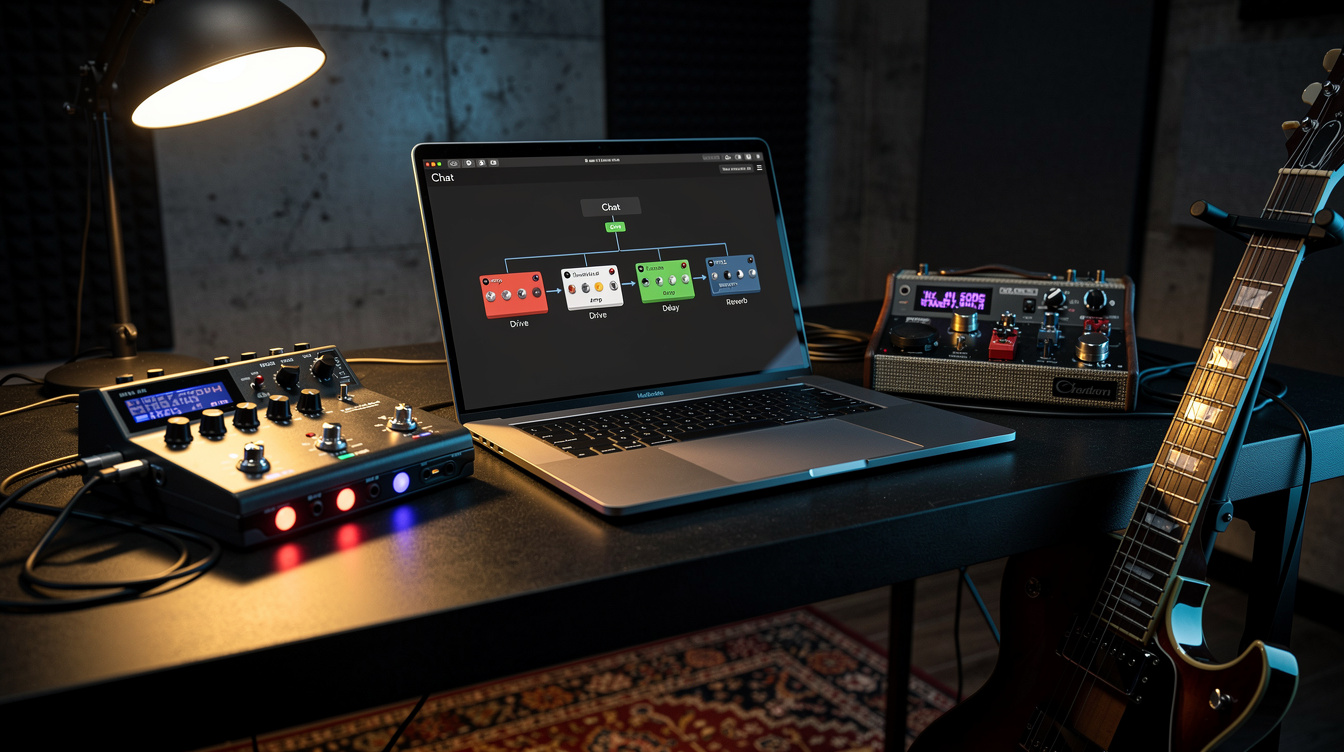
- Don't neglect the Tone Studio. The Katana's front panel gives you maybe 40% of its capabilities. Tone Studio unlocks amp variations, detailed EQ, additional effects, and global settings that transform the amp. If you own a Katana and haven't opened Tone Studio, you're leaving most of your amp in the box.
- Match your volume to the power setting. The Katana sounds best when the power amp section is working. At bedroom volumes, use the 0.5W setting with the master pushed up rather than the 50W setting at a whisper. The tone opens up dramatically.
The Boss Katana is not a handmade tube amp. But with intentional settings and a bit of time in the Tone Studio, it delivers the essential character of these classic amps at a fraction of the price and weight. For a deeper look at what makes each of these amp types sound the way they do, see our complete guide to guitar amp types. For most rooms and most gigs? That's the whole ballgame.