Start Here: The Nashville session clean tone in three pieces.
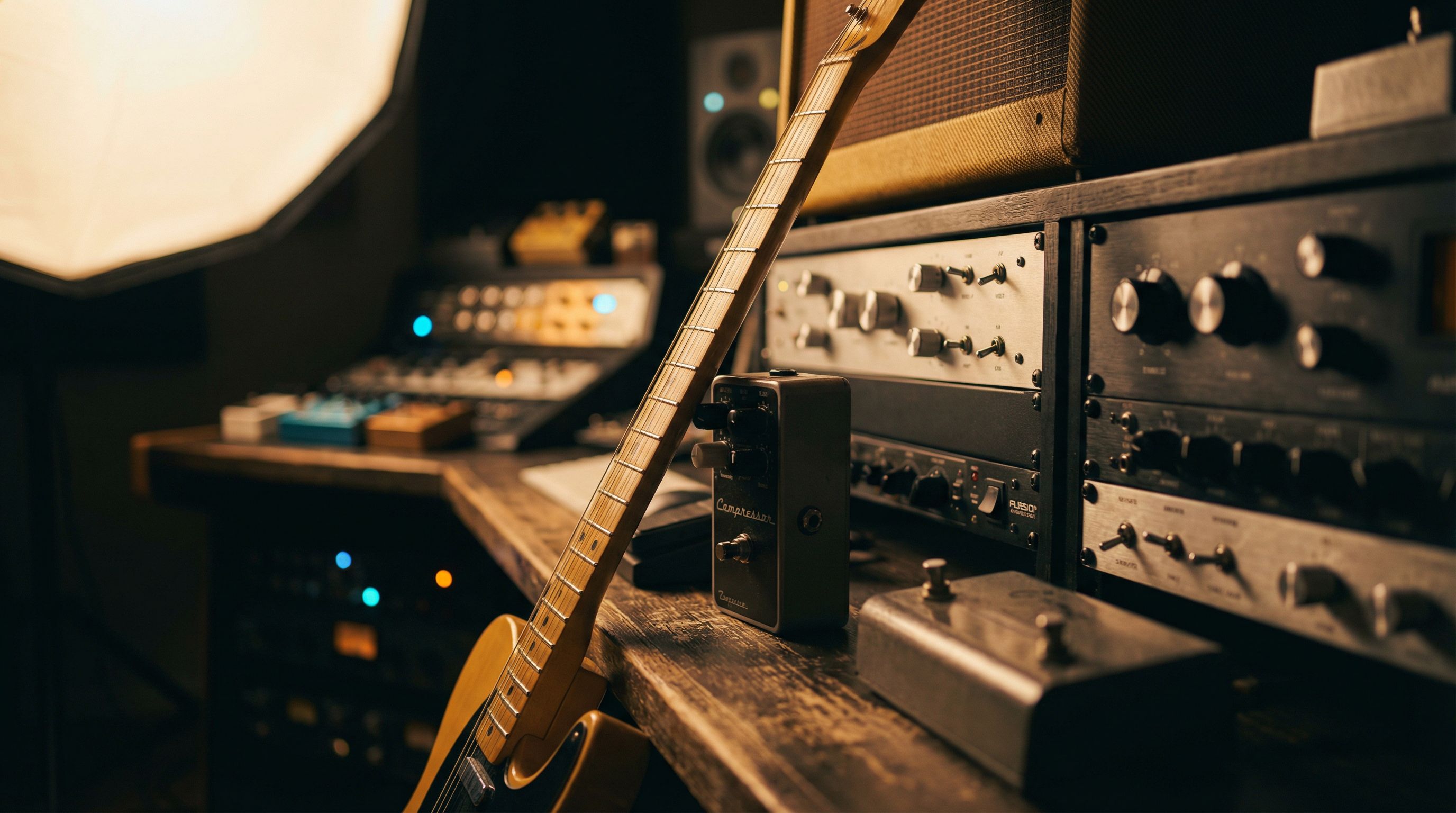
- Telecaster bridge pickup: the snap comes from here and nowhere else
- Compressor before the amp: for glue, not sustain
- Clean Fender-style amp: full headroom, no breakup at playing level
What Is the Nashville Session Clean Tone?
Session players define it by what's not there. No overdrive. No chorus. No ambient wash. A Telecaster, a compressor, and a clean amp. That's the whole thing.
Brent Mason, Johnny Hiland, Pete Anderson. Listen to any of them on a clean country track and you hear the same fingerprint. A compressed, snappy, glassy tone that sits in a mix like it was born there. It cuts through without being harsh. It's full without being boomy. The notes bloom after the pick attack. The chords have an almost percussive quality.
This tone works on country records. It also works on blues, pop, R&B, and gospel. The Tele and the compressor don't care about genre.
Quick-Start Settings
| Element | Setting | Notes |
|---|---|---|
| Pickup position | Bridge | The snap is here |
| Compressor ratio | About 3:1 to 4:1 | Glue, not limiting |
| Compressor attack | Fast | Let the squish happen |
| Compressor release | Moderate | About half-way |
| Compressor level | Match or slightly above unity | Compensate for gain reduction |
| Amp bass | About 9 to 10 o'clock | Not boomy |
| Amp mids | Around noon | Leave it there |
| Amp treble | About 1 to 2 o'clock | Bright but not harsh |
| Amp presence | Around noon | Adjust by ear |
| Amp reverb | About 9 o'clock | Light; presence more than space |
| Amp volume | Edge of clean breakup | As loud as it will go clean |
Why the Telecaster?
The bridge pickup on a Telecaster is a single-coil wound tight and mounted hard against a brass or steel saddle plate. That combination produces a specific high-frequency character (a snap on the pick attack and a mid-forward sustain) that other pickups don't replicate the same way.
The Strat bridge pickup comes close. The Strat middle pickup gets you some of it. A humbucker gets you none of it. The Tele bridge is the right tool for this tone.
That said, a Strat will do most of the work. Bridge position or the bridge/middle blend. It won't be identical but it'll be close enough to matter.
If you're playing a guitar with humbuckers, you're starting from a different place. You can still build a clean, compressed tone. But it won't have the snap. The compressor will glue it together, the amp will clean it up, and the result will be its own thing. Not the Nashville session tone.
What If You Don't Have a Tele?
| Guitar | Bridge Pickup | How Close |
|---|---|---|
| Fender Stratocaster | Single-coil | Very close |
| Fender Telecaster | Single-coil (tight, bright) | The real thing |
| PRS SE with single-coils | Single-coil | Close enough |
| Les Paul or SG | Humbucker | Different tone, still good |
| Strat-style with a humbucker in bridge | Humbucker | Lose the snap |
The guitar matters. The pickup matters more. If you have any single-coil Telecaster or Stratocaster, you're in the right neighborhood.
The Compressor: What It's Actually Doing
Most players think of compression as sustain. That's one use. In the Nashville session context, compression does something different. It's about glue and squish.
The fast attack means the compressor responds almost immediately after the pick strikes the string. The dynamic range narrows. The louder notes get brought down. The quieter notes feel more present. The whole signal becomes more consistent and more dense.
The result is a tone that sounds more even than you actually played. That's not cheating. That's production. Session players use it because it makes the guitar sit in a mix without fighting for space.
The other thing compression does here is add a small amount of apparent sustain. Not because the compressor creates sustain. Because it raises the quieter portion of the note's decay relative to the initial attack. The note doesn't die away as fast. It stays audible longer.
Compressor Settings Deep-Dive
| Control | Target Setting | What It Does |
|---|---|---|
| Ratio | About 3:1 to 4:1 | Moderate-to-firm gain reduction |
| Attack | Fast, about 8 to 9 o'clock | Responds quickly to transient |
| Release | Moderate, around noon | Recovers between notes |
| Threshold / Sustain | Below peak picking level | Engages on most notes |
| Level / Output | Match or slightly above bypass | Compensates for gain reduction |
Attack is the setting most people get wrong. A slow attack lets the pick transient pass before compression engages. This sounds natural. It also loses the squish. For this tone you want the compressor to catch the attack. Set it fast. The characteristic "squash" happens right at the pick strike and then the sustain blooms out from under it.
Ratio at 3:1 to 4:1 is firm without being extreme. You'll hear the effect without it sounding like a drum bus compressor. Higher ratios (8:1 and up) are limiting, not compression. That's a different application.
Release at around noon means the compressor recovers in roughly the middle of a typical note's duration. Too fast and you get pumping. Too slow and the compressor never fully recovers between notes, and everything feels stuck.
Level is the one people forget. Compression reduces gain. The output level knob adds it back. Set it so the bypassed and engaged tones are at the same volume. Then add a hair more if you want the compressor to push the front end of the amp slightly.
Which Compressor?
| Pedal | Character | Notes |
|---|---|---|
| MXR Dyna Comp | Classic, colored | Cheap, effective, what Nashville ran for decades |
| Keeley Compressor Plus | Transparent, versatile | Attack and release controls, blendable |
| Wampler Ego Compressor | Studio-quality, full-featured | Blend knob is useful |
| Boss CS-3 | Workable | A little noisy at high settings |
| Optical compressors (Diamond, Cali76) | Smooth, musical | Different character, slower feel |
The MXR Dyna Comp is what studio players used on the records that defined this tone. It's simple (sustain and level) and the attack is fixed. If you want more control, the Keeley Compressor Plus gives you attack and release in a small box. Both work.
The Amp
The Nashville session clean tone requires a clean amp. That's not flexible. The tone doesn't happen with a dirty amp; it happens in the space between "fully clean" and "just starting to breathe." You want the amp at its clean limit.
Fender-style amplifiers are the reference. The Fender Twin Reverb is the textbook choice. A lot of session players use it because it stays clean at high volume. The Deluxe Reverb is another. Blues Junior works. If you play through a Blues Junior (and some of us do) you can still get close. You just have less headroom.
Amp Settings
| Control | Target | Notes |
|---|---|---|
| Bass | About 9 to 10 o'clock | Pull it back; don't let it bloom |
| Middle | Around noon | Leave it there |
| Treble | About 1 to 2 o'clock | Bright; the Tele can handle it |
| Presence | Around noon | Adjust by ear to taste |
| Reverb | About 9 o'clock | Light; just a hint |
| Volume | Edge of clean breakup | As high as it will go clean |
The volume setting is the one that matters most. Run the amp as loud as it will go while staying clean at your playing level. The amp starts to breathe in that range. Notes have more character. The tone is fuller. Running the amp quiet and making up volume elsewhere gives you a thin sound.
The bass control at 9 to 10 o'clock looks low. It is. The Telecaster bridge pickup already has a pronounced upper-mid and high-frequency character. The amp doesn't need to add low end. If you set the bass higher, the tone gets muddy and the pick snap gets buried.
For more on amp settings and how they interact with different pickup types, the best Katana settings for a tube amp feel covers the principles behind tone-shaping controls in detail.
Signal Chain Order
The order matters. Compressor before amp. That's the main rule.
- Guitar (Telecaster, bridge pickup)
- Compressor
- Amp input
If you're using other pedals, the signal chain order guide covers where everything goes. For this tone, you probably don't need them.
Pickup Position and What It Changes
The Telecaster has a three-position switch on most models. Each position is a different instrument.
Bridge pickup. This is the Nashville session tone. Snap, twang, brightness. The pick attack is pronounced. Notes have a percussive front end and a clear decay. Chords cut. Single notes bark.
Neck pickup. Warm, round, full in the low-mids. Less snap. More sustain. This is the clean jazz or smooth country tone. Still useful. Not the session tone.
Both pickups (middle position). This is what some players call the "open" tone. The pickups are out of phase in a way that gives the sound a hollow, slightly scooped character. It's good for rhythm playing and chord work. Still clean, still compressed, but different from either pickup alone.
| Position | Character | Use |
|---|---|---|
| Bridge | Snap, twang, bright | Lead lines, picking patterns |
| Both (middle) | Open, slightly hollow | Rhythm, chord work |
| Neck | Warm, round, full | Smooth lead, fills |
For a full breakdown of how pickup position shapes tone across different guitars and playing styles, the pickup position guide goes deep on the frequency differences between positions.
When to Add Something
Most of the time, you don't. The tone is the Tele and the compressor. Adding a pedal changes it.
That said, a Tube Screamer in boost mode (drive down around 7 o'clock, level up around 2 o'clock, tone around noon) will push the front end of the amp. More compression. More density. A little more sustain on lead lines. This is useful for when you want a slightly thicker sound without adding real distortion.
If you go this route, the TS9 or TS808 fits the application. Drive near minimum. Level does the work. The Tube Screamer settings guide covers exactly how to run it as a clean boost rather than an overdrive.
The song doesn't need that in most cases. Start without it. Add it if the track calls for something thicker. Take it off when it doesn't.
On Modelers
If you're running a modeler instead of a tube amp, the block structure is straightforward.
- Compressor block: any optical or FET compressor model, ratio about 3:1 to 4:1, attack fast, release moderate, level at or slightly above unity
- Amp block: Fender Twin or Deluxe Reverb model, bass low, treble up, volume pushed high in the clean zone
- Cab block: a 1x12 or 2x12 Fender-style cab IR
- Reverb block: spring type, mix light, decay short to medium
The amp block volume is where modeler players usually go wrong. Push it higher than feels right. The character of the amp in that near-breakup zone is what you're after. If the amp model is running at 40% of its clean range, you're not accessing the same tone.
FAQ
What compressor do Nashville session players use?
The MXR Dyna Comp has been standard in Nashville studios for decades. It's inexpensive, reliable, and sounds right on a Telecaster. Keeley's Compressor Plus is a more modern option with attack and release controls. Both are appropriate. The pedal matters less than how you set it.
Do I need a Telecaster or will a Stratocaster work?
A Strat will work, especially in the bridge position or the bridge/middle blend. The tones are related. The Tele bridge pickup has a slightly tighter and more percussive character due to the saddle plate mounting, but the difference is smaller than you might expect. A well-set-up Strat bridge pickup through a compressor and a clean amp gets you into the same neighborhood.
Why is the bass knob set so low on the amp?
The Telecaster bridge pickup already has a pronounced upper-mid and high-frequency character. It doesn't need help in the low end. Setting the bass higher muddies the pick attack and makes the tone indistinct in a mix. Keep the bass restrained and let the midrange carry the tone.
Can I get this tone with a low-wattage amp or an attenuator?
You can approximate it. The issue is headroom. The Nashville clean tone lives in the amp's upper-clean-volume range, where the power section is working but not breaking up. A low-wattage amp running at full clean volume has less of that character than a higher-wattage amp in the same zone. An attenuator helps with volume but costs you some of the amp's natural compression at the power section. It's a workable compromise.
Is the compressor always on, or just for certain parts?
In session playing, the compressor is almost always on. It's not a special effect; it's part of the baseline tone. Think of it the same way you think of the amp's reverb. It's just there. Some players use a blend control to mix dry and compressed signal, which reduces the effect without removing it. But for the classic Nashville session sound, the compressor runs.