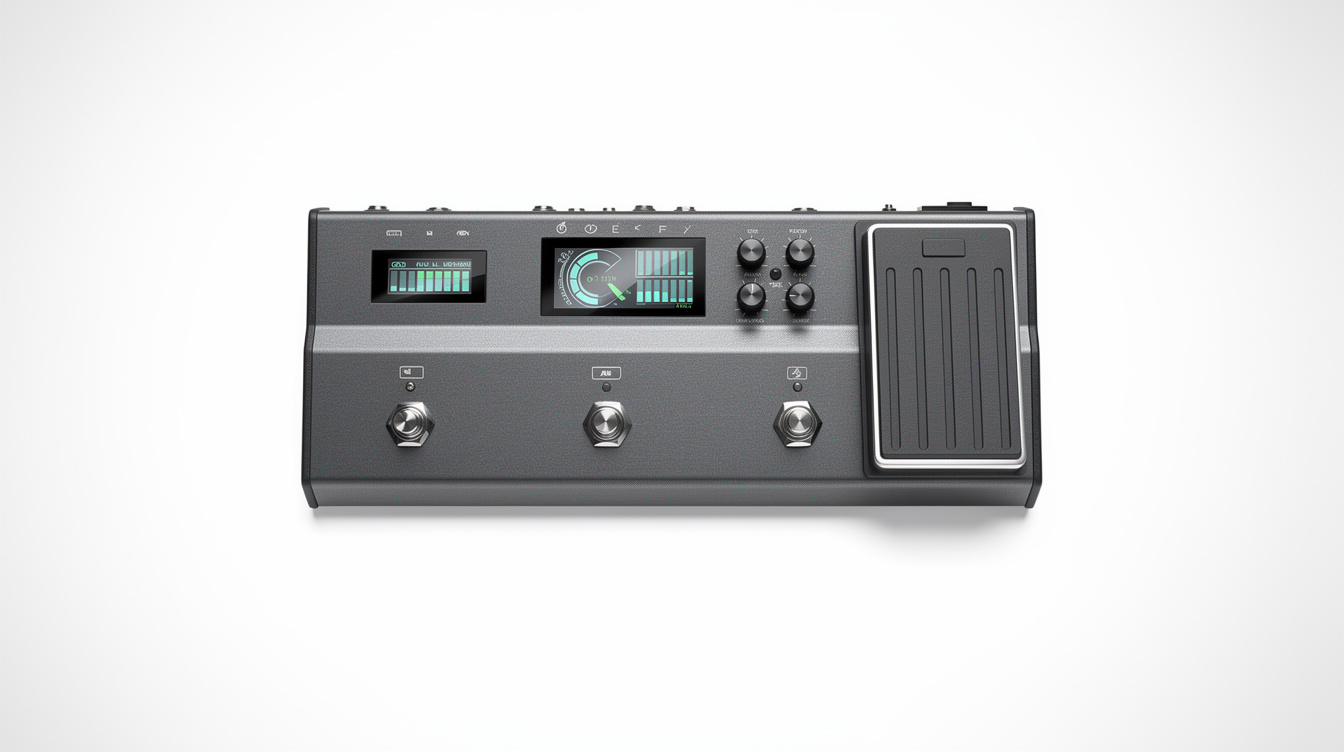
Quick read: CorOS 4.0 dropped three reverbs onto the Quad Cortex, and they aren't interchangeable. Nordic Concert Hall is the depth reverb — it pushes a part back and opens space around it. Studio Plate 70 is the sheen reverb — bright, dense, and forward, sustain without distance. Blossom is the texture reverb — it swells in after the note and turns held chords into pads. Pick by the job the part has to do in the mix, set it from the starting points below, then turn it down until you almost can't hear it.
Most reverb advice treats reverb as one knob: more or less. But the three reverbs CorOS 4.0 added to the Quad Cortex don't differ in amount. They differ in what they do to where the guitar sits. One pushes it back. One keeps it up front and adds shine. One makes it stop being a guitar and start being a pad. If you reach for the wrong one, no amount of dialing fixes it — you're using a depth tool to do a texture job.
So forget which sounds biggest when you solo it. That's not the question. The question is what the part needs to become once the rest of the track is playing — and each of these three answers a different version of that.
The Three Reverbs at a Glance
| Reverb | Inspired by | The job | Where it puts the guitar |
|---|---|---|---|
| Nordic Concert Hall | Valhalla VintageVerb (Concert Hall) | Depth, distance, air | Further back, in a big room |
| Studio Plate 70 | Lexicon PCM70 | Sheen, sustain, density | Up front, brighter, present |
| Blossom | Strymon BigSky (Bloom) | Swelling pad texture | Dissolved into a wash |
CorOS 4.0 actually added a fourth device, Phase Doctor, but that's an alignment tool for stacking amps, not a reverb — it lives in a different conversation, the one in our Phase Doctor walkthrough. The reverbs are the part that changes how your parts breathe.
Nordic Concert Hall: When You Want Distance
This is the reverb for making a part sound like it's somewhere. A real pre-bloom — the small gap before the tail opens up — and a long, diffuse decay that spreads the guitar across a large space. It doesn't make the part louder or brighter. It makes it sound further away, in a good way, the way a clean arpeggio can hang at the back of a mix and define the whole sense of room without ever stepping forward.
That distance is the trade. The hall pushes the guitar back, which is exactly what you want when the part is supposed to be atmosphere, and exactly what you don't want when it's the hook.
Starting point:
The low cut matters more than people expect. A hall with the lows left in fogs up the whole bottom of the mix. Roll everything below about 200 Hz out of the reverb and the tail clears space for the bass instead of fighting it. If the QC's global EQ is new to you, the global EQ guide covers where these cuts live.
Studio Plate 70: When You Want Shine Without Distance
The plate is the opposite trick. Almost no pre-delay, a dense and bright tail that comes in right on the heels of the note. Instead of pushing the part back, it wraps it in a fine, shimmering sustain — think the close, metallic sheen on a clean rhythm part in a polished pop record, the kind of reverb that adds length and gloss but never makes you feel like the guitar walked to the back of the room.
I'll be honest about a wrong assumption I had going in. I figured a plate would just be a "smaller hall" — same distance effect, shorter tail. It's not. The thing that surprised me was the attack: with the pre-delay near zero, the plate fuses to the dry note so tightly that the part actually feels more present with the reverb on than off, brighter and more immediate, not further away. That's the whole point of it, and it's why a plate is the reverb you use when you need air but can't afford to lose the front edge of the part.
Starting point:
Keep the high cut up — the plate's brightness is the feature. Pull it down only if the sheen starts to fizz on a high-gain part.
Blossom: When the Guitar Should Become a Pad
Blossom isn't a room. It's a swell. The reverb's onset is delayed and ramped, so it grows in behind the note rather than appearing under it — hold a chord and it blooms into a sustained wash, like a synth pad that happens to have a guitar's harmonic fingerprint. This is the one for ambient beds, for the texture that sits under a verse and never asks to be noticed, for the part that disappears into the track exactly where it should.
The catch with Blossom is that it eats rhythm. Because it swells, fast playing turns to mush — the bloom of one note arrives over the attack of the next. It wants long, held, sparse playing. Give it a chord every two bars and it's gorgeous. Give it sixteenth notes and it's fog.
Starting point:
A little modulation in the tail keeps the pad from sounding static — it drifts instead of sitting still. The low cut, again, keeps the wash from swallowing the bottom end.
How To Choose, in One Question
When you don't know which to grab, ask what the part is supposed to do once the track is up:
- Sit behind everything as space? Nordic Concert Hall.
- Stay up front but stop sounding dry and small? Studio Plate 70.
- Stop being a guitar and become a pad? Blossom.
And the part nobody tells you: the right reverb is the one you stop hearing once the full mix plays. If you can still pick out the reverb as a separate effect when the drums and bass come in, it's too loud — pull the mix down until it's almost gone, then leave it there. The space should feel like a property of the guitar, not a thing sitting on top of it.
None of this is locked to the Quad Cortex, either. The references these are built on are all reachable elsewhere — the free Valhalla Supermassive covers the hall and bloom territory for zero dollars, any decent plate plugin gets you the Studio Plate 70 job, and the Strymon BigSky is the Blossom source. The names are CorOS-specific. The jobs are universal — and if you're still mapping which reverb does what on your platform, reverb types is the place to start.